Building for the Next Century: The Enduring Vision of Clay Chapman
By Wyatt Poindexter
Most builders construct homes for the people who will move into them next year. Clay Chapman thinks about the families who may still be living in them 200 years from now.
That difference in perspective explains almost everything about Clay’s work.
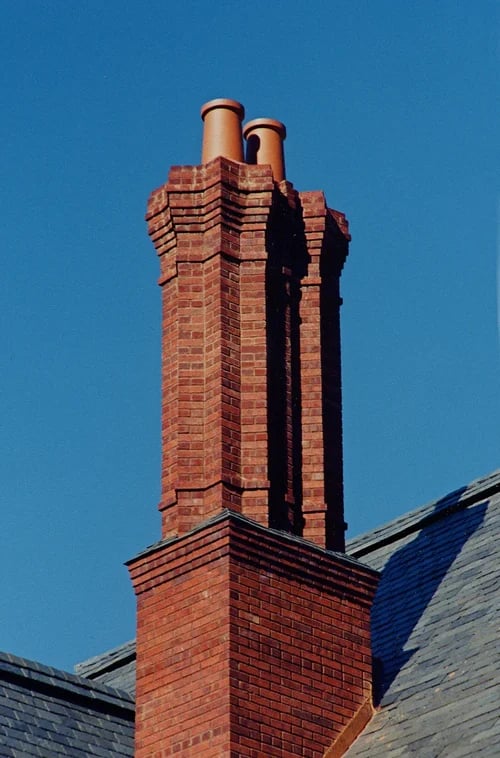
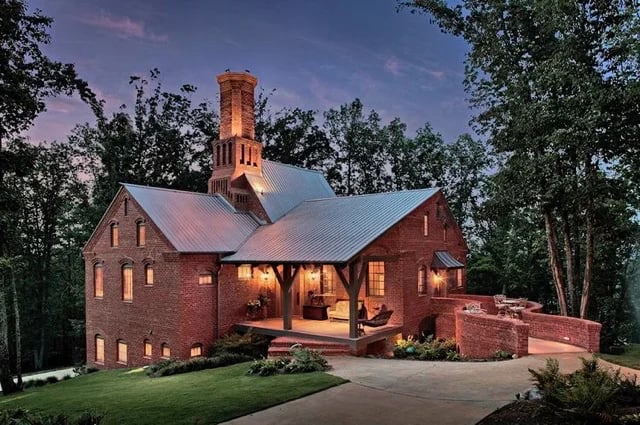
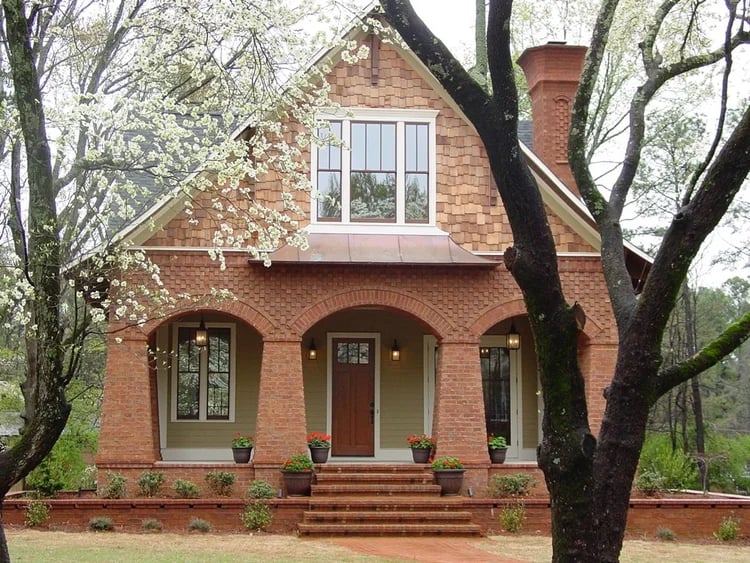
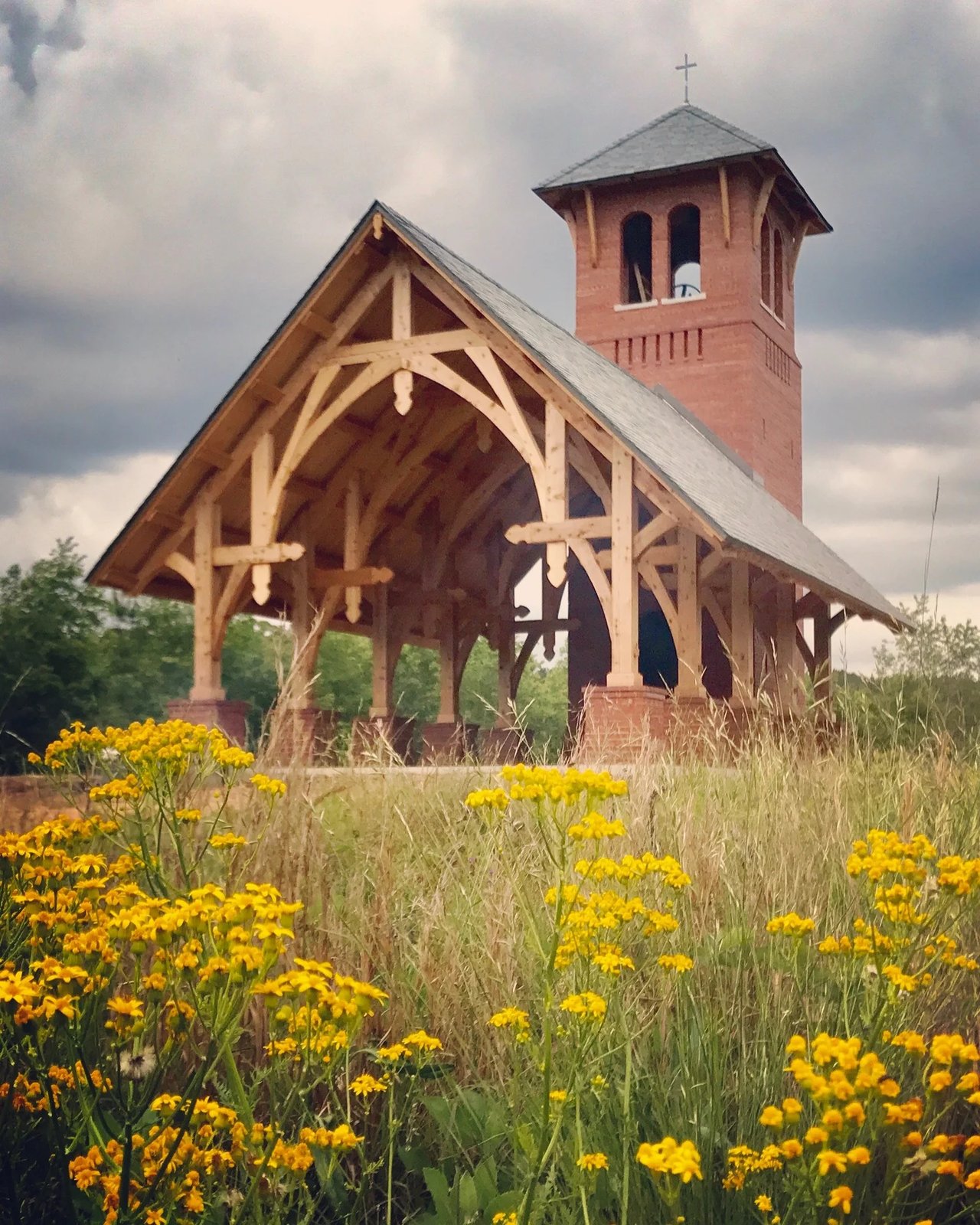
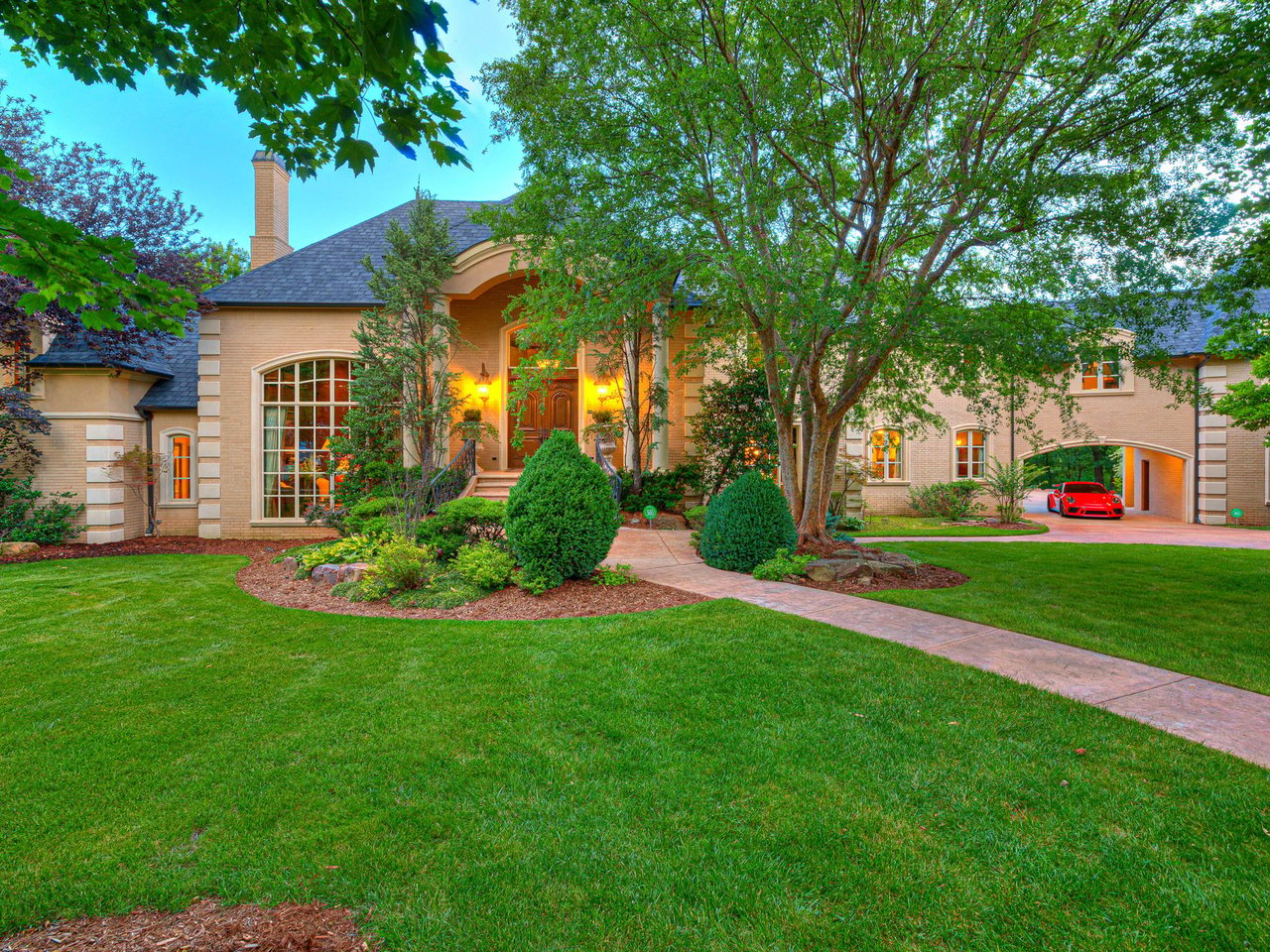
With more than 30 years of building experience, Clay has designed and constructed an extraordinary range of structures, including period homes, horse stables, chapels and intimate cottages. His buildings are distinctive, but never simply for the sake of being different. Every detail has a purpose. Every material is expected to do its job. Every structure is intended to age with dignity.
Clay is an award-winning builder, master mason, timber framer, sculptor and painter. That rare combination is evident in everything he creates. He does not approach a building merely as a collection of walls, windows and mechanical systems. He sees it as both shelter and sculpture—a functional work of art capable of becoming more beautiful with time.
His philosophy is refreshingly straightforward: Let building inspire wonder and celebrate possibility—then call it architecture. But first, we must make things that last.
More Than a Homebuilder
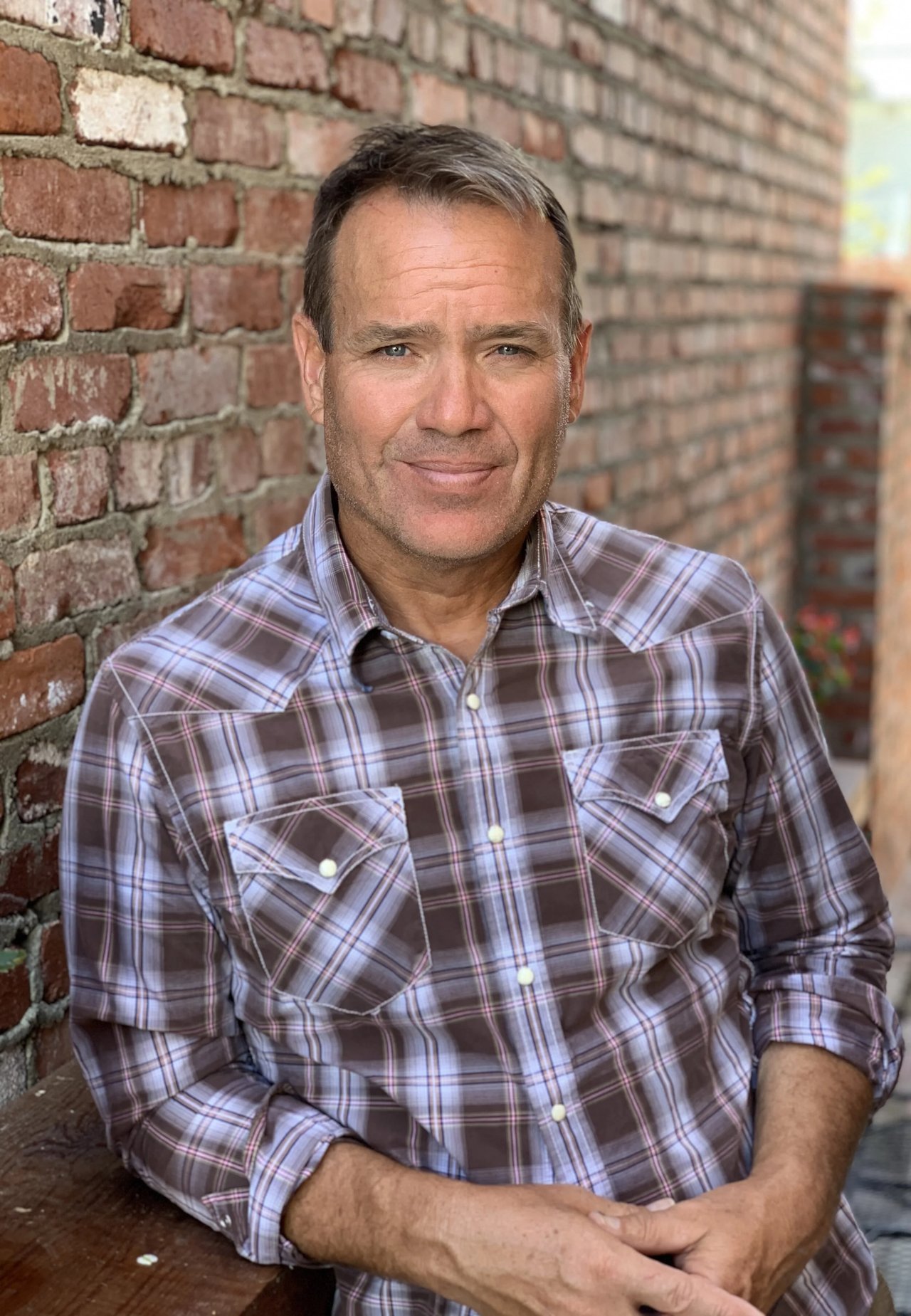
I have never felt that simply calling Clay a homebuilder adequately describes who he is or what he creates. Clay is a true artist, craftsman and innovator who expresses his vision through architecture. He does not merely construct houses; he creates enduring works of art—some of the most beautiful, imaginative and thoughtfully designed homes I have ever experienced.
Clay sees every home through an artist’s eye. He understands proportion, texture, light, materials and the smallest details that give a building its soul. His background in painting and sculpture is evident in everything he creates, as is his willingness to question conventional thinking. He combines the wisdom and craftsmanship of the past with modern innovation, constantly searching for better, more beautiful and more enduring ways to build.
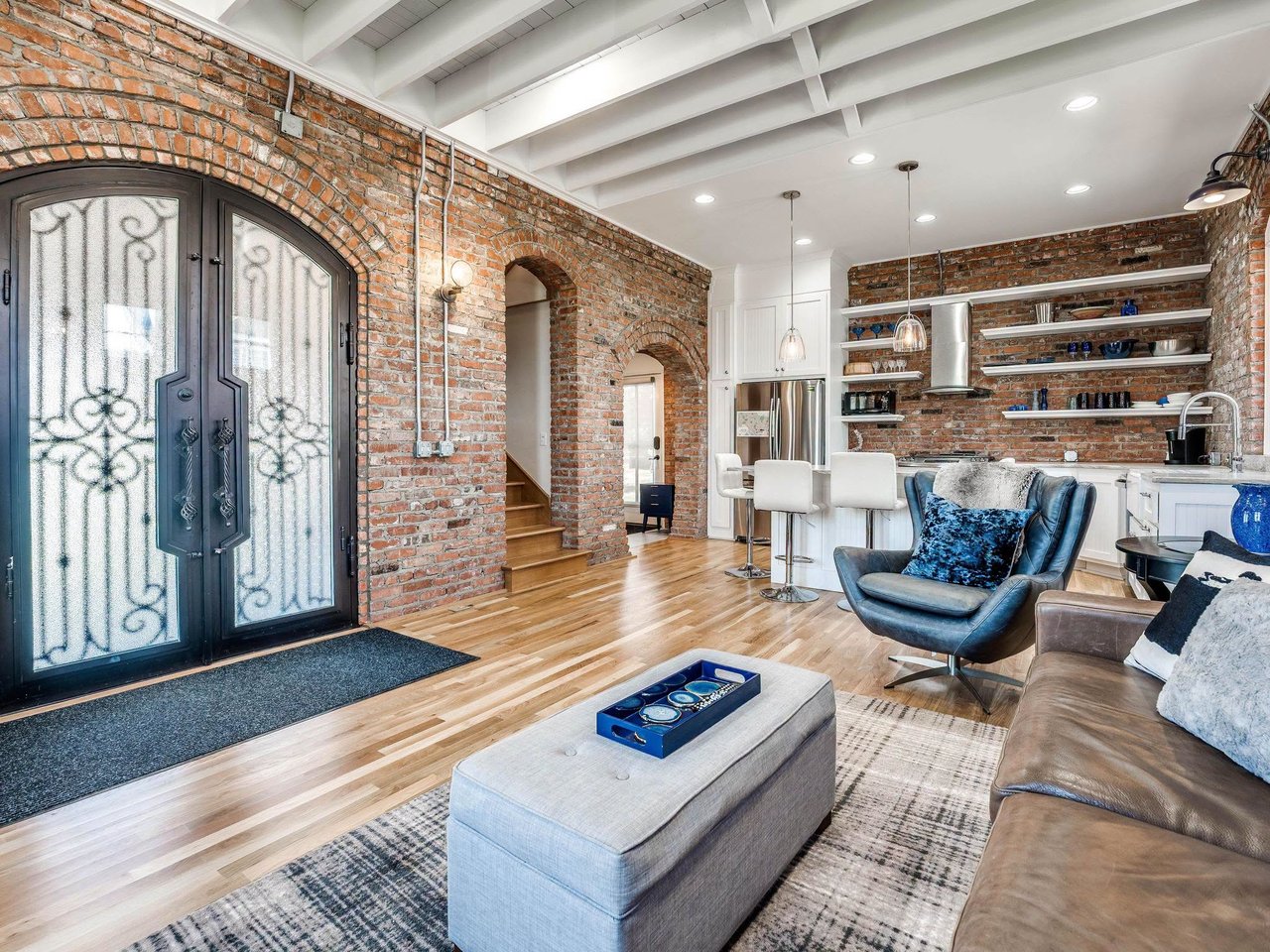
I once told Clay that walking into one of his homes feels like the holidays. There is an unmistakable warmth, comfort and sense of belonging that immediately welcomes you. Plenty of people can build an impressive house, but Clay possesses the rare ability to capture how a home should actually feel. His homes do not simply photograph beautifully—they make you want to slow down, gather with the people you love and stay awhile.
That emotional connection may be Clay’s greatest gift. He understands that a truly remarkable home is not defined only by its materials, craftsmanship or appearance. It is also defined by the way it makes people feel when they walk through the door. Clay creates homes with heart, warmth and a sense of permanence—places that somehow feel familiar even when you are experiencing them for the first time.
His creativity is never creativity for its own sake. Every artistic decision has purpose. Every innovative idea is grounded in the belief that homes should inspire wonder, enrich their communities and remain loved for generations. His buildings feel timeless because they are created with both imagination and intention.
As extraordinary as Clay is as an artist, innovator and builder, he is an even better person. His generosity, humility and willingness to share his knowledge are every bit as impressive as the homes he creates. I am deeply proud of everything he has accomplished, truly honored to know him and incredibly grateful to call Clay one of my close friends.
A Rebellion Against Disposable Building
In 2012, Clay founded Hope for Architecture, an initiative created to challenge what he describes as “disposable building.”
Modern construction has given us speed, convenience and remarkable technology. Unfortunately, it has also produced buildings that may require major repairs, replacement or complete reconstruction within a relatively short period. Clay began asking a question that should concern everyone involved in architecture, construction and community planning:
What are we leaving for our grandchildren—and their grandchildren?
Clay recognized that future generations could be tasked with rebuilding an enormous percentage of the structures being constructed today. Rather than simply criticizing the problem, he began searching for a practical solution.
His breakthrough came from something surprisingly modest: a garden shed in his backyard.
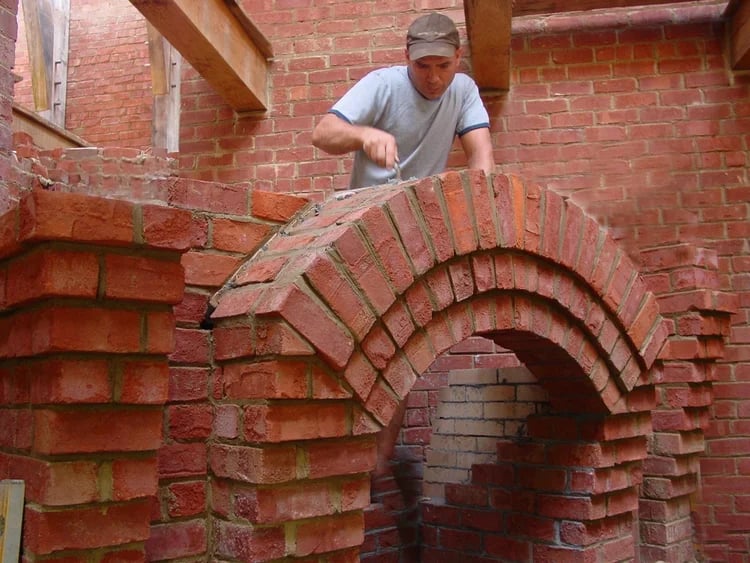
While building that shed, Clay saw the potential of traditional structural masonry applied in the practical, utilitarian manner common before World War II. These time-tested techniques offered possible answers to several modern challenges, including sustainability, rising energy costs, long-term maintenance and housing affordability.
That small structure helped inspire a much larger mission.
Hope for Architecture began rescuing the building wisdom of the past and combining it with the technological advancements of the present. The objective was never to recreate history as a museum piece. It was to determine which older methods had endured for centuries, identify the best modern innovations and bring the two together in a financially viable construction model.
As Clay explains:
“We are not purists outside of a pure objective—to discover the best way to build in the modern context, given the gauntlet of challenges we now face.”
That sentence captures his philosophy perfectly. Clay is not interested in old methods simply because they are old, nor does he embrace new technology merely because it is new. He wants the best solution—the one that produces beautiful, efficient and resilient buildings capable of serving generations.
Where Old-World Craftsmanship Meets Modern Technology
Clay’s mass-wall masonry buildings combine centuries of proven precedent with present-day technology. The result is a construction process designed to deliver durability, energy efficiency, beauty and lasting value.
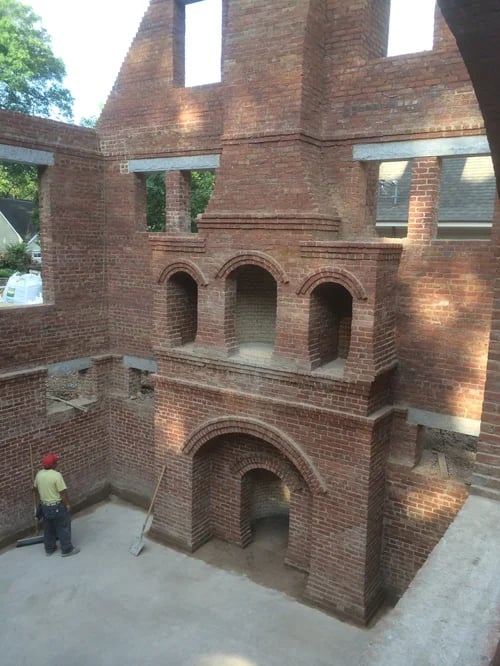
“Mass wall” refers to a substantial masonry wall system in which the wall itself provides structure and thermal mass. These are not conventional lightweight walls decorated with a thin masonry veneer. They draw their strength and performance from the substance of the wall.
History has already demonstrated how long massive masonry buildings can endure. Many have remained useful and beautiful for centuries. Clay’s work asks how those proven ideas can be adapted to contemporary expectations, modern building systems and today’s financial realities.
Hope for Architecture partnered with Clemson University’s National Brick Research Center on thermal-mass studies examining how conventional, R-value-focused energy models may fail to capture the complete performance of mass-wall construction. That research supports a larger point: modern building performance cannot always be understood by studying one isolated number. A building must be evaluated as a complete, living system.
Clay spent years refining the process through five separate research-and-development homes. Each project became an opportunity to learn, test and improve the integration of modern construction advancements with load-bearing masonry while maintaining production efficiency.
This was not an experiment designed to create one expensive architectural showpiece. Clay wanted to know whether multi-century buildings could be constructed at a production pace and price capable of serving different markets and demographics.
That is a far more difficult challenge—and a far more meaningful one.
The Borough at Carlton Landing
In 2014, Clay, his wife Katie and their three children moved to Carlton Landing, Oklahoma. The move provided Clay with an opportunity to continue refining his building methodology while establishing an apprenticeship program that could teach these principles to a new generation of builders.
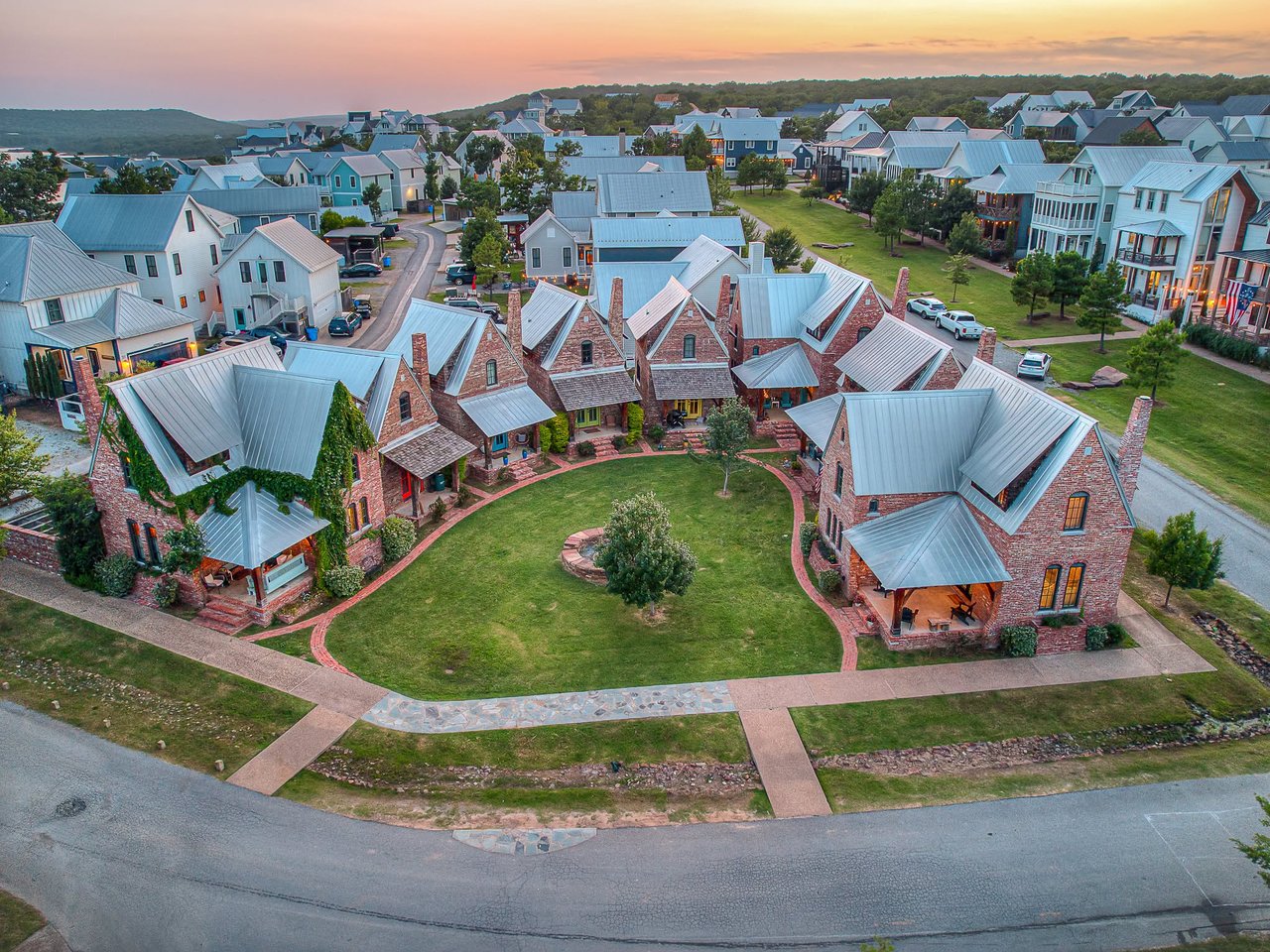
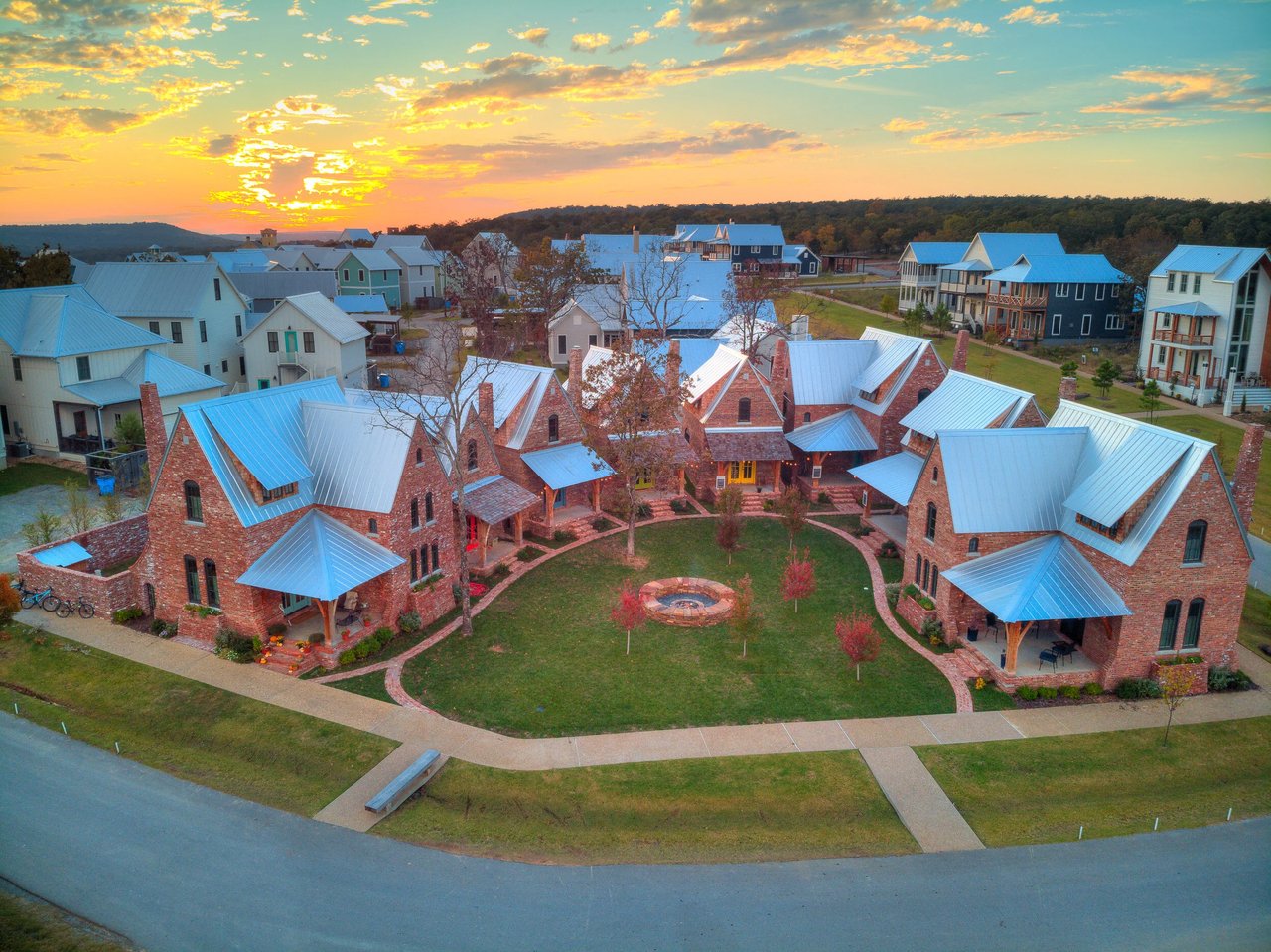
In 2017, his ideas began moving from individual projects to a larger neighborhood model through The Borough, a pocket neighborhood located within the DPZ-planned community of Carlton Landing.
The Borough is perhaps the clearest physical expression of Clay’s vision.
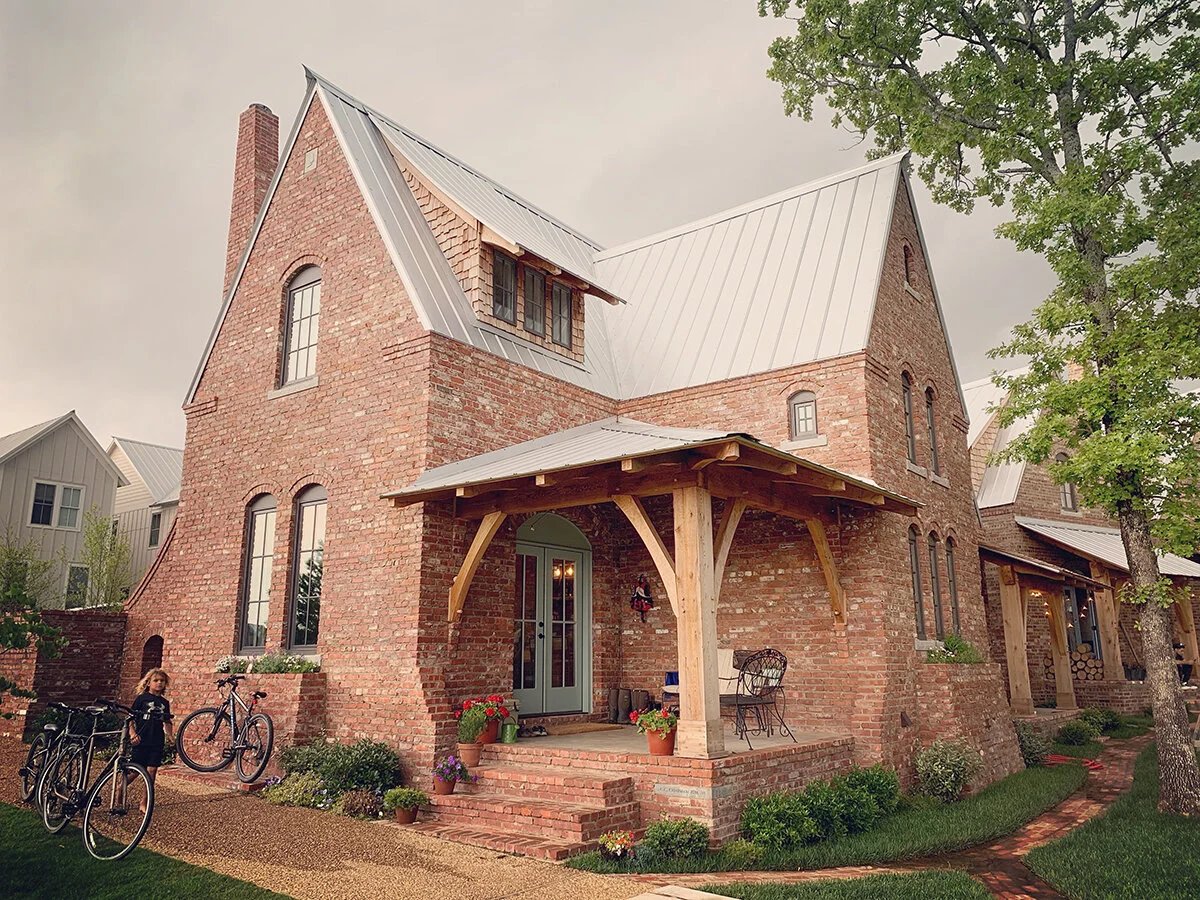
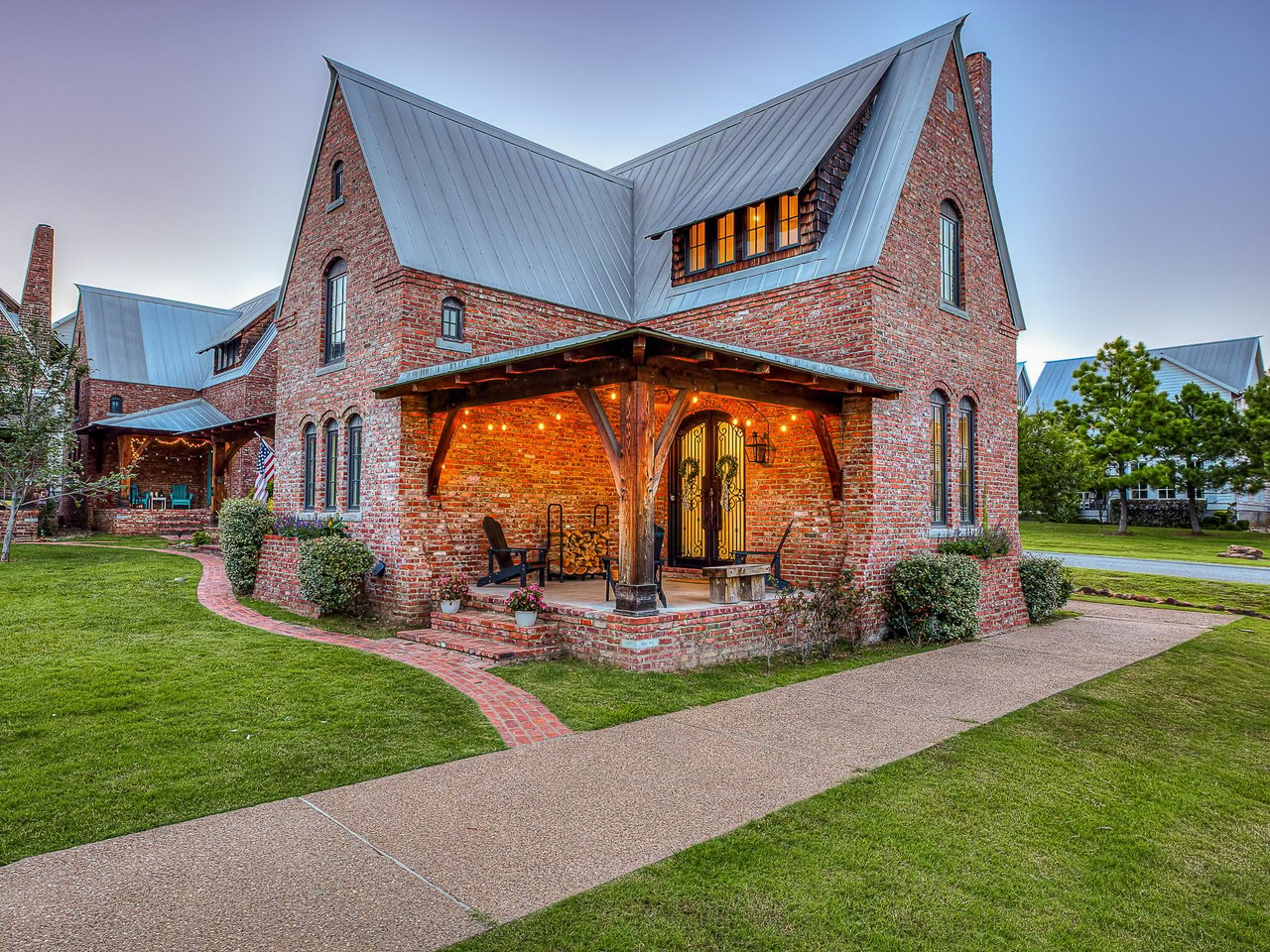
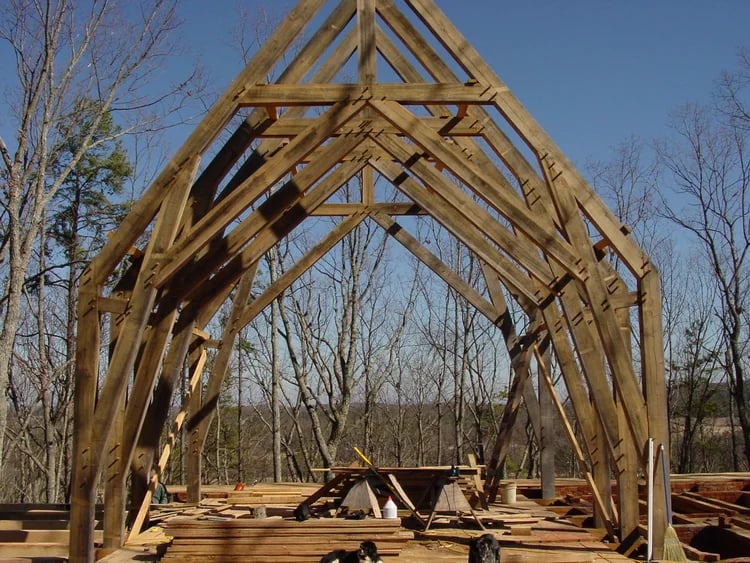
Set on approximately one-third of an acre, the micro-village consists of eight thoughtfully arranged cottages ranging from roughly 800 to 1,400 square feet. Each home includes a timber-framed front porch connected to the surrounding community by an intimate, winding brick footpath measuring just 21 inches wide.
That narrow path may sound like a small detail, but it represents something much larger: human scale.
The Borough was not designed around oversized roads, isolated garages or the idea that bigger is automatically better. It was designed around people, beauty, conversation and belonging. The cottages sit close enough to create community while maintaining their individual character. Front porches encourage interaction. Footpaths invite exploration. Buildings and landscaping work together to create a place that feels as though it evolved naturally over time.
The result is not simply a collection of small houses. It is a neighborhood with a soul.
The Borough demonstrates that durability does not have to feel severe, sustainability does not have to look industrial and smaller homes do not have to sacrifice architectural beauty. It is a compelling example of how lasting construction and thoughtful community design can reinforce one another.
Most importantly, it proves that Clay’s ideas can be taken to scale.
Following the original research projects and development of The Borough, apprentices began graduating and applying these techniques independently. Additional mass-wall projects followed, expanding the movement well beyond one builder or one neighborhood. What began with a backyard shed has grown into a grassroots revival of structural masonry.
Teaching Builders to Build Differently
Clay understands that one person cannot transform the building industry alone. That is why education and apprenticeship are fundamental parts of Hope for Architecture.
The Hope for Architecture apprenticeship program trains builders who are committed to the initiative’s values and principles. Apprentices do more than observe the process; they learn the discipline, craftsmanship and reasoning behind it.
Clay has also led mass-wall masonry workshops with the University of Notre Dame’s School of Architecture, sharing practical knowledge with students and emerging professionals who will help shape the future of the built environment.
This generosity matters.
True craftsmen occasionally guard their knowledge because they believe secrecy protects their value. Clay has taken the opposite approach. He wants the knowledge to spread. His goal is not merely to produce more Clay Chapman buildings. It is to inspire more builders to reconsider how—and for whom—we build.
The success of Hope for Architecture should ultimately be measured not only by the structures Clay personally completes, but also by the builders he trains, the architects he influences and the communities that adopt more durable practices because someone encountered his ideas.
National Recognition for a Remarkable Body of Work
Clay’s work has earned widespread recognition from the architecture, construction and New Urbanism communities.
His honors include:
- The National Brick Industry Association’s Best in Class Single-Family Residential Award in 2011
- The National Brick Industry Association’s Gold Award for Single-Family Residential in 2013
- The City of Decatur Design of the Year Award in 2013
- The Congress for the New Urbanism’s Michael Barranco Award in 2017
- The Urban Guild’s inaugural Excellence in Exploration Award in 2019
- A Congress for the New Urbanism Charter Award for The Borough at Carlton Landing in 2022
These awards recognize more than the appearance of Clay’s buildings. They affirm the importance of the questions behind them.
Can we build homes that are beautiful enough to be cherished?
Can we make them strong enough to survive for centuries?
Can traditional craftsmanship and modern technology work together?
Can durable architecture become financially viable for more people?
Can the places we construct today become meaningful inheritances for people we will never meet?
Clay’s work answers each of those questions with an emphatic yes.
Clay, Katie and the Carlton Landing Community
I have had the privilege of getting to know Clay and Katie as friends through Carlton Landing. Their contribution to the community extends well beyond construction and real estate.
Katie has become a top Realtor for The Agency at Carlton Landing, helping buyers understand not only the homes available there, but also the distinctive lifestyle and genuine sense of community Carlton Landing offers. Her knowledge, professionalism and enthusiasm for the town make her an invaluable resource for families exploring ownership in this remarkable place.
Together, Clay and Katie embody so much of what makes Carlton Landing special. They are not simply working in the community. They are investing their talents, their family and their future in it.
Clay continues to explore better ways of designing and building, while Katie helps families discover and become part of the community they call home. Their work is different, but deeply connected: Clay creates places intended to last, and Katie helps people find the place where their own stories can begin.
Buildings Worth Loving—and Saving
The easiest way to describe Clay Chapman is to call him an award-winning builder. It is accurate, but incomplete.
He is an artist, craftsman, innovator and teacher pursuing an ambitious idea: that our buildings should deserve to survive.
Beauty plays an essential role in that mission. Durability alone does not guarantee preservation. A building may be physically capable of lasting for centuries, but people must also love it enough to maintain it. Clay combines resilient construction with artful design because he understands that the buildings most likely to endure are the ones people cannot imagine tearing down.
That may be the most powerful aspect of Hope for Architecture.
Clay is not merely trying to extend the physical life of a building. He is creating structures with emotional permanence—places that become part of family histories, neighborhood identities and community traditions.
In a culture often obsessed with faster, larger and newer, Clay offers a different measure of success: build thoughtfully, build beautifully and build as though the future matters.
Someday, generations from now, families may gather on one of Clay’s timber-framed porches, walk one of his winding brick paths or warm themselves beside a masonry wall constructed long before they were born. They may not know every detail of the work required to create it.
But they will know that someone cared enough to make it last—and cared enough to make it feel like home.
To learn more about Clay Chapman, Hope for Architecture and this extraordinary building movement, visit www.HopeForArchitecture.com.
Wyatt Poindexter
Oklahoma Luxury Real Estate
The Agency
405-417-5466
[email protected]
www.OKLuxuryHomes.com