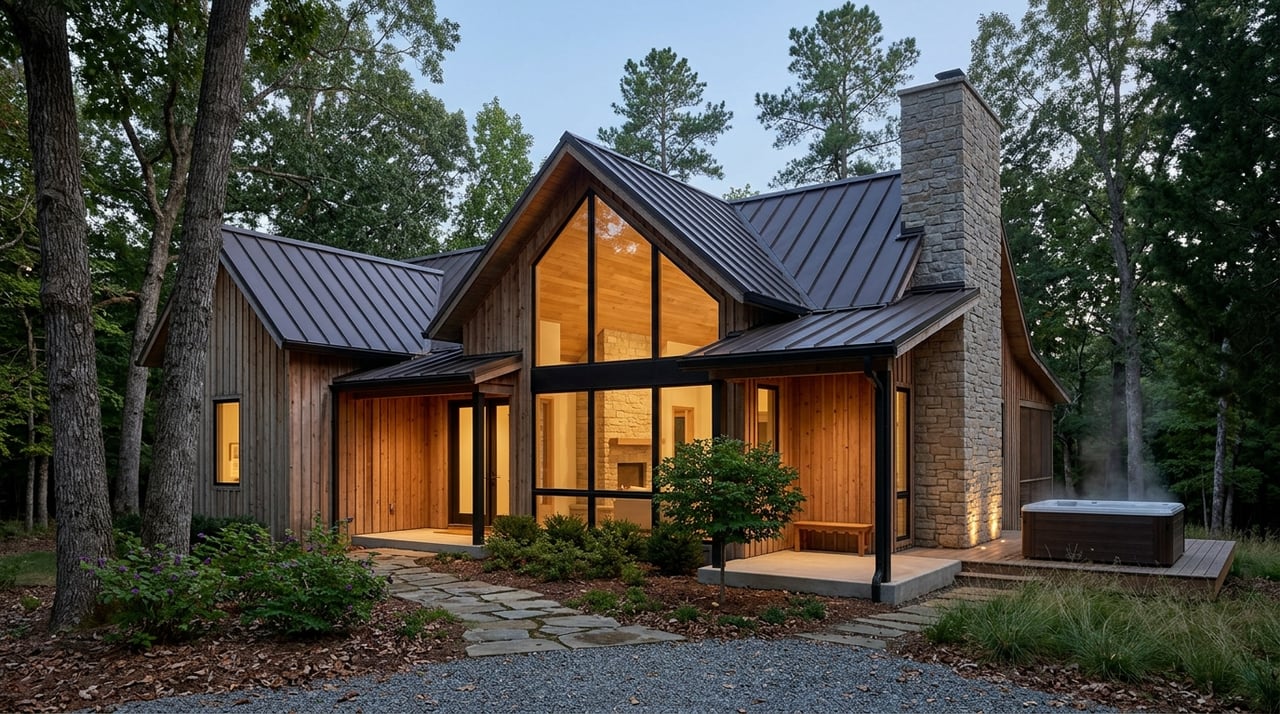
Thinking about buying a luxury cabin in Broken Bow that you can enjoy now and rent when you are away? That idea is easy to love, but the smartest buyers know this kind of purchase needs more than a great view and a beautiful interior. If you want a property that fits your lifestyle and supports income goals, you need to understand how location, guest expectations, licensing, financing, and taxes all work together. Let’s dive in.
Why Broken Bow Draws Luxury Cabin Buyers
Broken Bow and Hochatown are destination markets, not typical commuter suburbs. The area is known as the gateway to Broken Bow Lake, Beavers Bend Resort Park, the Mountain Fork and Glover Rivers, and the Ouachita National Forest. That means buyers are not just purchasing a home, they are purchasing access to an experience.
Beavers Bend State Park and the surrounding area are known for hiking, biking, boating, fishing, water skiing, river float trips, canoeing, horseback riding, trout streams, and a large lake shoreline. The Broken Bow Area Chamber also notes average summer temperatures around 80 degrees and more than 50 inches of annual rainfall. For you as a buyer, that makes outdoor setting, privacy, and year-round usability especially important.
Location Shapes Cabin Performance
In Broken Bow, a luxury cabin often competes on location as much as design. Buyers and guests tend to care about access to Broken Bow Lake, Beavers Bend State Park, restaurants, and other attractions. A beautiful cabin in the wrong setting may not deliver the same personal enjoyment or rental appeal.
You should also look closely at road access and maintenance responsibility. Hochatown publishes information on county-owned public roads, privately owned collector roads, and wildfire alerts and evacuation resources. In a forested market, details like long driveways, private road access, and emergency planning matter more than many buyers expect.
What to check on location
- Distance to Broken Bow Lake and Beavers Bend attractions
- Whether access is by public road or private road
- Driveway length and ease of arrival for guests
- Nearby dining and recreation options
- Privacy, views, and usable outdoor space
- Emergency access and wildfire awareness
What Luxury Cabin Guests Expect
The local luxury lodging mix includes traditional log and native-rock cabins, plus newer modern farmhouse, modern-rustic, and upscale-rustic designs. Across the market, listings often feature king suites, bunk rooms, screened or covered decks, hot tubs, fire pits, outdoor fireplaces, pet-friendly layouts, and Wi-Fi. Many also highlight gathering space over sheer bedroom count.
That matters because high-end guests usually want more than a place to sleep. They tend to value privacy, scenic outdoor living, and a cabin that feels ready for connection and relaxation. If your goal is to blend personal use with income, the best property is often one that supports both a memorable owner experience and a strong guest experience.
Features that often support both lifestyle and income
- Covered or screened outdoor living areas
- Hot tub and fire pit
- Strong indoor-outdoor flow
- Spacious kitchen and dining areas
- Multiple sleeping configurations, including bunk space
- Reliable Wi-Fi
- Pet-friendly layout, if that fits your plan
Decide Your Main Goal First
Before you make an offer, decide what role the cabin will play in your life. Is it primarily a personal retreat that you may rent occasionally, or is it a true income property that you also plan to enjoy? That decision affects nearly everything that follows.
If personal enjoyment comes first, you may care more about privacy, owner storage, and convenient owner use. If income is the priority, you may focus more on guest flow, amenity mix, turnover efficiency, and how often you are willing to block your own calendar. Clarity up front helps you buy the right property instead of trying to force the wrong one into your plan.
Understand Hochatown Short-Term Rental Rules
If the cabin is inside Hochatown town limits, local compliance deserves early attention. The town requires a short-term rental license effective July 1, 2024, and says the license must be displayed near the main entry. The town also states that a new license costs $400 total.
Hochatown’s FAQ says the local lodging tax rate is 4 percent, effective May 1, 2023. It also says gross income for lodging-tax purposes includes more than just the nightly rate. Cleaning, pet, concierge, photography, chef, massage, and delivery fees are included.
Just as important, the town says owners should not assume Airbnb or VRBO remits the town lodging tax for them. If you plan to rent your cabin, you should understand the workflow for collecting, tracking, and remitting these amounts well before closing.
Compliance questions to ask early
- Is the property inside Hochatown town limits?
- Does the current use require a short-term rental license?
- Who will track lodging tax and guest-related fees?
- Who is responsible for filing and remitting the town tax?
- Are there planning or zoning issues that affect future changes?
Plan for Real Operating Demands
A luxury cabin is not a passive asset. In this market, cabins often rely on amenities like hot tubs, fire pits, outdoor living spaces, game rooms, and pet stays. Those features can help drive appeal, but they also increase maintenance, vendor coordination, and replacement needs.
You should expect more turnover management than you would with a typical single-family home. A written operating plan with your property manager can help protect both guest experience and the condition of the home. That plan should cover housekeeping standards, hot-tub service, internet uptime, guest messaging, damage response, and replacement cycles for linens, furniture, and outdoor furnishings.
Review these details with a property manager
- Who blocks owner stays on the calendar
- Who controls occupancy and booking access
- How cleaning is scheduled between guests
- How hot-tub service is handled
- How guest fees are tracked for local lodging tax
- Whether the manager remits taxes or only collects funds
- How damage claims and urgent repairs are handled
Financing Can Change the Math
One of the biggest mistakes buyers make is assuming every cabin can be financed the same way. Fannie Mae distinguishes between second homes and investment properties, and the difference matters. A second home must be occupied by the borrower for some portion of the year, suitable for year-round occupancy, remain under the borrower’s exclusive control, and not be subject to an arrangement that gives a management firm control over occupancy.
Fannie Mae also says rental income from a second home generally cannot be used to qualify, even if some limited rental use is allowed. Investment properties follow different underwriting and pricing rules. If you are counting on projected rent to help you qualify, ask your lender how the cabin will be classified before you move too far into the process.
When rental income is used for qualifying, Fannie Mae generally uses 75 percent of gross monthly rent, with 25 percent treated as vacancy and maintenance. Lenders may also document income with tax returns, leases, or appraiser market-rent support. This is why your financing conversation should happen early, not after you fall in love with a specific property.
Ask your lender these questions
- Will this cabin be treated as a second home or an investment property?
- Can projected rental income be used for qualifying?
- What documentation will be required for market rent?
- How does management structure affect occupancy classification?
- What cash reserves or pricing adjustments apply?
Know the Tax Basics Before Closing
Tax treatment depends in part on how often you use the cabin personally and how often you rent it. For federal tax purposes, the IRS says a dwelling unit is used as a home if personal use exceeds the greater of 14 days or 10 percent of the days rented at a fair rental price. If the cabin is used as a home and rented fewer than 15 days, the rental activity is generally not reported on Schedule E.
If it is rented 15 days or more, rental income is reported and expenses must be divided between personal and rental use. The IRS also notes that days spent doing substantial repairs do not count as personal use, while family stays at below-market rent generally do. These rules can affect the real economics of ownership, especially if you plan to spend meaningful time at the property yourself.
At the state level, the Oklahoma Tax Commission says nonresidents are taxed on net rents and royalties from real and tangible personal property located in Oklahoma. In Hochatown, owners are also responsible for local lodging-tax remittance according to the town’s FAQ. Because this touches income reporting, expense allocation, depreciation, and local tax workflows, it is wise to review your plan with a tax professional before you buy.
Discuss these points with your tax professional
- Your expected personal-use days each year
- Whether the 15-day rental rule may apply
- How expenses will be allocated between personal and rental use
- Whether Oklahoma-source rental income creates a filing obligation
- How depreciation and local lodging tax fit into your plan
A Simple Way to Evaluate a Cabin
When you tour cabins in Broken Bow, it helps to use a practical filter instead of focusing only on finishes. A strong purchase usually checks five boxes: location, amenity mix, local compliance, financing fit, and tax clarity. If one of those pieces is weak, the property may still work, but you should understand the tradeoff.
Here is a simple way to think about it:
| Category | What to confirm |
|---|---|
| Location | Access, privacy, outdoor appeal, road type, proximity to attractions |
| Amenities | Gathering space, outdoor living, hot tub, Wi-Fi, sleeping flexibility |
| Compliance | STR license needs, lodging tax process, local planning considerations |
| Financing | Second-home vs. investment classification, income-use rules |
| Taxes | Personal-use counts, reporting rules, Oklahoma filing obligations |
The Right Cabin Matches Your Intentions
The best Broken Bow cabin is not always the newest or the most dramatic. It is the one that matches how you actually plan to use it, how you want it operated, and how comfortable you are with the business side of ownership. In a destination market like Broken Bow, thoughtful planning usually matters just as much as beautiful design.
If you want a luxury cabin that serves as both a retreat and a disciplined real estate investment, the key is to make decisions in the right order. Start with your goals, test the property against local realities, and build the right team around financing, management, and tax planning. If you want tailored guidance on evaluating luxury cabins in Broken Bow and across Oklahoma’s lifestyle markets, Wyatt Poindexter offers the kind of private, white-glove counsel that can help you move forward with clarity.
FAQs
What makes Broken Bow appealing for a luxury cabin purchase?
- Broken Bow draws buyers because it is a destination market centered around Broken Bow Lake, Beavers Bend Resort Park, the Mountain Fork River, and extensive outdoor recreation, which makes both location and experience important.
What amenities matter most in a Broken Bow luxury cabin?
- Common high-end features include king suites, bunk rooms, covered decks, hot tubs, fire pits, outdoor fireplaces, pet-friendly layouts, Wi-Fi, and strong gathering spaces for groups.
What short-term rental rules apply in Hochatown?
- If a cabin is inside Hochatown town limits, the town requires a short-term rental license, requires the license to be displayed near the main entry, charges $400 for a new license, and applies a 4 percent local lodging tax.
What is included in Hochatown lodging-tax income?
- According to the town’s FAQ, gross income includes the nightly stay plus fees such as cleaning, pet, concierge, photography, chef, massage, and delivery fees.
How do lenders view a Broken Bow cabin purchase?
- A lender may classify the property as a second home or an investment property, and that distinction affects occupancy rules, whether rental income can be used to qualify, and overall loan terms.
How does personal use affect taxes on a Broken Bow cabin?
- Federal tax treatment can change based on how many days you use the cabin personally versus how many days it is rented, so buyers should review expected use and reporting with a tax professional before closing.