Is a Broken Bow cabin on your shortlist for a short-term rental investment? You are not alone. Travelers flock to the area for lake life, pine forests, and cozy cabin escapes, which keeps demand resilient when you choose the right property and operate it well. In this guide, you will learn what drives bookings, how to confirm local rules and taxes, how to model returns, and which features and strategies can set your cabin apart. Let’s dive in.
Broken Bow demand drivers
Broken Bow sits next to the pines, water, and trails that bring visitors back year after year. The area is anchored by outdoor recreation and easy drive-time access for weekend trips from major Oklahoma and Texas metros. That mix supports steady interest in well-run cabins.
Year-round appeal and seasonality
Guests come for hiking, fishing, boating, and forest views tied to Beavers Bend State Park and Broken Bow Lake. You typically see higher demand in fall for leaf color, in summer for the lake, and around holidays. Shoulder seasons can still perform when you price smartly and offer reliable internet for remote workers.
Who books cabins here
Typical guests include couples on romantic getaways, families on nature vacations, small groups renting multiple cabins for reunions, and anglers or outdoor enthusiasts. The visually driven nature of the cabin market also responds well to curated design and photography on social media, which can lift your average daily rate when your listing stands out.
Supply and competition
Inventory ranges from standalone cabins to lodge-style properties and HOA communities. New construction can rise quickly when demand surges, so track new supply and comparable listings as you underwrite. Use third-party data to benchmark occupancy, ADR, and RevPAR for your specific ZIP code or micro-location.
- For market metrics and comps, tap AirDNA or Mashvisor.
- Cross-check active Airbnb and Vrbo listings to see current amenities and pricing in your niche.
Regulations and taxes
Before you go under contract, confirm your legal path to operate. Local rules and tax policies can change, so verify with official sources directly.
City, county, and HOA rules
Broken Bow and McCurtain County can have rules regarding STR registration, zoning, occupancy limits, parking, noise, and signage. If the property is in an HOA or deed-restricted subdivision, review CC&Rs for any limits on short-term rentals. Ask the seller for past permits or any code enforcement history and keep those records with your files.
Action steps:
- Contact the City of Broken Bow and McCurtain County planning and zoning offices to confirm current STR requirements.
- Review any HOA documents and confirm STR permissions in writing before you remove contingencies.
Taxes and remittance
Short-term rental income is taxable, and many jurisdictions require local lodging or sales tax collection. Platforms may remit some taxes for you in certain areas, but you remain responsible for compliance.
- Review registration and filing requirements with the Oklahoma Tax Commission.
- Check whether Airbnb or Vrbo collects and remits any local taxes for your exact address. Confirm details in your host account and keep documentation.
Insurance and safety
A standard homeowners policy usually excludes STR use. Secure a policy designed for short-term rentals that covers liability, building, contents, and business income, and consider an umbrella policy. Equip the property with smoke and carbon monoxide detectors, fire extinguishers, and clear emergency information. If the property uses septic or well water, document system capacity, maintenance history, and quality testing.
Model your returns
Treat your underwriting like a business plan. Use trusted data, factor full operating costs, and run multiple scenarios. These core metrics will keep you grounded.
- ADR: Average daily rate for comparable cabins.
- Occupancy rate: Percent of nights booked across the year.
- RevPAR: ADR multiplied by occupancy. Useful to compare properties of different sizes.
- Gross revenue: ADR times occupancy across 365 days or by season.
- NOI: Net operating income. Gross revenue minus operating expenses, before mortgage and taxes.
- Cap rate: NOI divided by purchase price.
- Cash-on-cash return: Annual pre-tax cash flow divided by total cash invested.
Example modeling workflow
- Step 1: Pull ADR and occupancy by month for your target neighborhood from AirDNA or Mashvisor.
- Step 2: Multiply seasonal ADR by occupancy to estimate monthly gross revenue. Sum for the year.
- Step 3: Subtract operating expenses, itemized by category. Include a maintenance reserve and vacancy.
- Step 4: Subtract debt service to find annual cash flow. Compute cash-on-cash and cap rate.
Expense checklist
- Mortgage principal and interest
- Property taxes and STR insurance
- Utilities such as electricity, propane, water or septic, and internet
- Cleaning and turnover costs
- Property management or co-hosting fees
- Platform and payment processing fees
- Routine maintenance, repairs, and a reserve
- Supplies such as linens and consumables
- Licensing fees and lodging tax remittance costs
- Vacancy and owner-use days
Ranges and sensitivity
- Full-service management often costs about 20 to 30 percent of rental revenue. Partial services or co-hosting can run 10 to 20 percent.
- Cleaning fees vary by size and condition. Model by turnover or as a percent of revenue.
- A maintenance reserve of 5 to 10 percent of gross revenue is common. Adjust for property age and systems.
- Model multiple mortgage rate scenarios if using financing and stress test your break-even occupancy.
What to buy in Broken Bow
Your property’s features drive booking velocity and pricing power. Focus on guest demand patterns and the strongest amenities for this market.
High-demand features
- Proximity to outdoor draws. Being near trails, Beavers Bend State Park, or easy lake access helps attract weekenders.
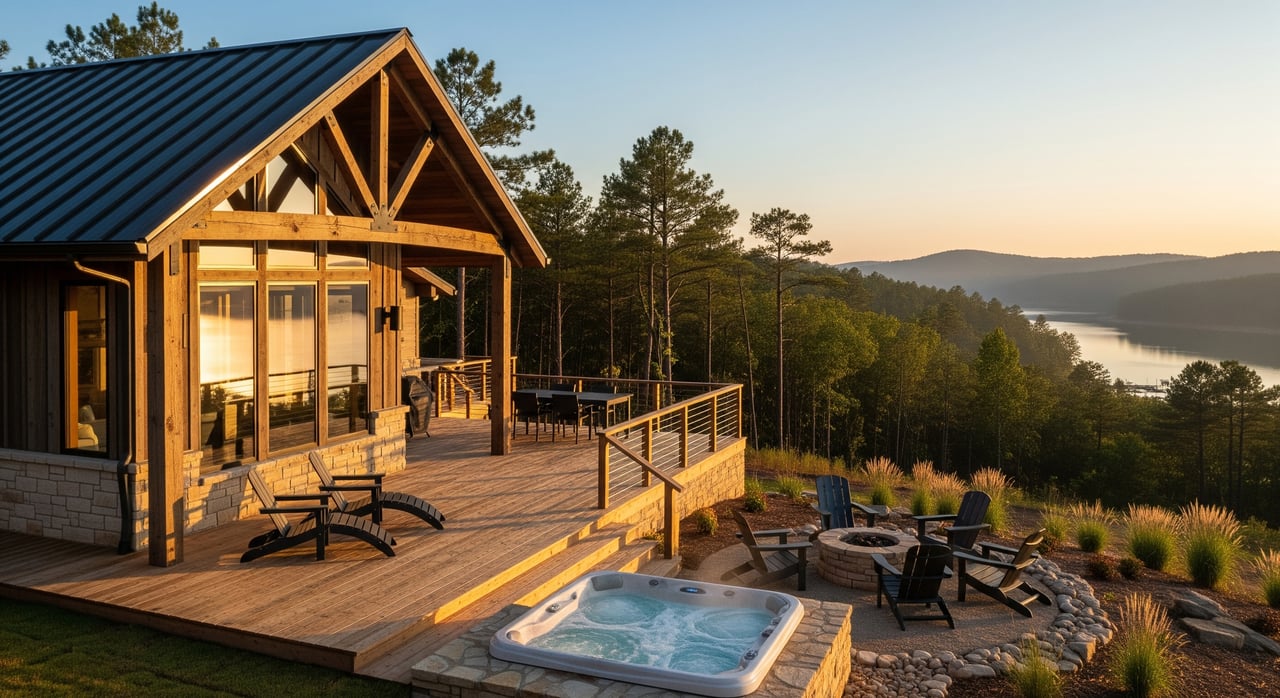
- Seclusion and scenery. A private setting, views, and outdoor living spaces such as decks, fire pits, and a hot tub are top performers.
- Right size and layout. Families and small groups look for 2 to 4 or more bedrooms and enough bathrooms for your sleeping capacity.
- Design and presentation. Thoughtful interiors and professional photography can increase ADR and occupancy.
- Reliable high-speed internet. This supports remote workers and longer midweek stays.
Due diligence essentials
- Confirm zoning and STR permissions with city, county, and HOA.
- Commission a thorough inspection. Evaluate foundation, roof, HVAC, moisture or mold risk, septic age and capacity, and well water quality if applicable.
- Verify access and road maintenance. Note seasonal conditions and any 4WD needs.
- Document utilities. Understand propane versus natural gas, septic versus sewer, and internet providers.
- Review flood and fire risk. Reference available maps and local guidance, then confirm insurance options and costs.
- Request historical performance if available. Prior calendars, bookings, revenue, and expense records help validate underwriting.
Operating models
Choose an operating style that fits your goals and time commitment.
Owner-managed
You handle bookings, guest communication, cleaning, and maintenance. Fees are lower, and you control brand and pricing. Time demands are higher and you need strong local vendor support.
Co-hosting
You keep control of the listing while a co-host manages selected tasks such as guest messaging, cleaning coordination, or pricing. Fees are lower than full-service management with some time savings.
Full property management
A manager runs booking channels, pricing, guest support, cleaning, and routine maintenance. Fees are higher but your operations are turnkey. Compare service levels and cost structures from two or three local providers.
Hybrid approach
Mix and match. For example, manage marketing and guest messaging yourself while outsourcing cleaning and emergency maintenance.
Pricing and marketing tools
Dynamic pricing helps you optimize ADR by season, weekday, and lead time. Consider tools such as PriceLabs, Beyond Pricing, or Wheelhouse. Pair pricing with high-quality photos, a clear and accurate listing, and a digital guidebook with local recommendations. Set straightforward house rules and check-in instructions to reduce friction and protect the property.
Risks and protections
Every STR market has risk. Plan ahead to protect your downside and your time.
- Regulatory changes. New rules can limit STRs or raise costs. Verify your right to operate before closing and keep permits current.
- Market saturation. New cabins can compress occupancy and ADR. Underwrite conservatively and track new supply.
- Seasonality swings. Keep reserves for slower months and market midweek and longer stays.
- Damage and liability. Screen guests, use deposits or platform damage protection, and carry STR-specific insurance. Consider an LLC with your legal advisor.
- Natural hazards and systems. Flooding, storms, wildfires, or septic and well issues can disrupt income. Maintain a repair reserve and prioritize preventative maintenance.
- Financing risk. Rising rates increase debt service. Stress test with multiple interest rate outcomes.
Action plan for the next 30 days
- Pull STR performance data for your target ZIP codes with AirDNA or Mashvisor.
- Call Broken Bow and McCurtain County planning and zoning to confirm current STR rules and any registration steps.
- Price out full-service management and co-hosting with two or three local providers.
- Get insurance quotes for STR coverage, including liability limits and loss-of-income protection.
- Schedule an inspection protocol that includes septic, well water testing if applicable, and utility verification.
- Build two pro formas. Run conservative and optimistic scenarios with different ADR, occupancy, and mortgage rates.
- Draft your amenity plan and photography budget so you can launch with a competitive listing.
Ready to explore opportunities
If you want a second home that also works as a performing asset, a Broken Bow cabin deserves a close look. With the right location, amenities, and operating plan, you can build a resilient revenue stream and a retreat you enjoy. To discuss a specific property or craft a data-backed plan tailored to your goals, request a private, white-glove consultation with Wyatt Poindexter.
FAQs
Is Broken Bow a good market for short-term rental cabins?
- Yes. Demand is supported by outdoor recreation linked to Beavers Bend State Park, drive-time access from major metros, and strong seasonality that rewards well-located, well-amenitized cabins.
What taxes apply to an STR cabin in Oklahoma?
- Rental income is taxable and many areas require lodging or sales tax collection and remittance; confirm registration and filing with the Oklahoma Tax Commission and verify any platform tax automation for your exact address.
How much do managers charge to run a Broken Bow cabin?
- Full-service property management commonly ranges around 20 to 30 percent of rental revenue, while co-hosting or partial services often fall closer to 10 to 20 percent.
Which amenities boost bookings in Broken Bow?
- Proximity to trails and the lake, privacy and views, outdoor spaces with a hot tub and fire pit, the right bedroom count for families or groups, strong interior design, and reliable high-speed internet.