If you’re drawn to places where tree‑lined streets curve gently past landscaped parks and elegant homes, Nichols Hills may feel like it was designed just for you. You want everyday ease without giving up privacy, green space, or architectural character. In this guide, you’ll learn how Nichols Hills came to be, what its homes look and feel like, where you’ll spend time outdoors, and how shopping, dining, and club life shape the rhythm of the neighborhood. Let’s dive in.
Planned beauty from day one
Nichols Hills was purpose‑built for graceful residential living. In 1929, developer Dr. G.A. Nichols set out to create an upscale garden‑suburb on roughly 1,280 acres, with curving streets, generous setbacks, and small, distributed parks that soften the prairie landscape. The Kansas City landscape firm Hare & Hare helped design the plan, a major reason the neighborhood’s streetscapes feel coherent and green from block to block. You can trace that origin story on the city’s history page and planning references, which capture how the design intent still guides the area today on the community’s overview.
That early planning vision is still visible. The city’s charter and zoning have long emphasized a residential focus and park preservation, and the ongoing maintenance of medians, plantings, and sculptures keeps the garden‑city feel intact. The result is an environment that looks classic, yet lives comfortably for modern routines.
Architecture that blends eras
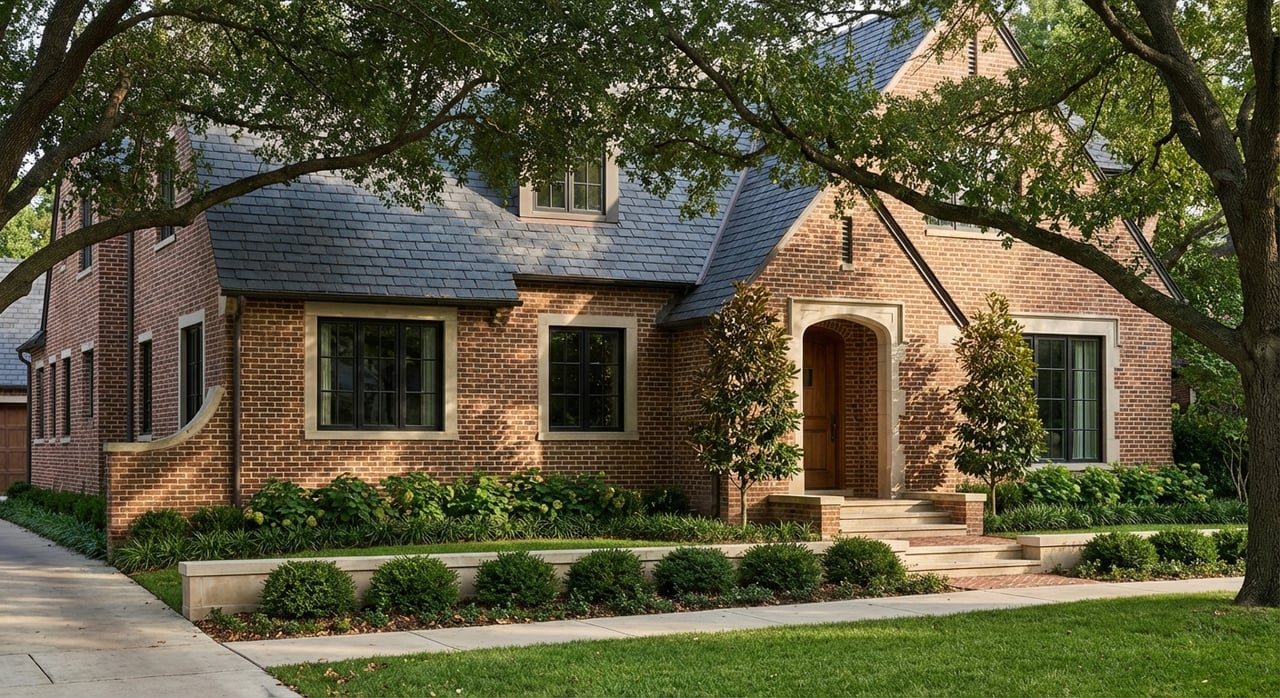
Nichols Hills offers a refined mix of architectural styles that read as timeless rather than trendy. You’ll see original Tudor and English‑influenced cottages, Colonial Revival and Georgian symmetry, French‑country and Mediterranean forms, and mid‑century ranch homes. Alongside these sit newer custom builds that bring clean lines, broad glazing, and sophisticated outdoor living.
Lot sizes are generous for an in‑city location, with deep setbacks and mature canopies that create privacy and a sense of estate scale. Materials skew premium: brick and stone exteriors, slate or tile roofs on many period homes, arched entries, and formal façades that reveal themselves gradually as you move along a winding street. On larger properties, circular drives, gates, and walled courtyards are common, often paired with resort‑style pools and outdoor kitchens that turn backyards into everyday retreats. For a closer look at these luxury details in the local context, explore this neighborhood deep‑dive on driveways, gates, and outdoor courts.
Parks and trails that shape daily life
Nichols Hills maintains an intentionally distributed park network that makes the neighborhood feel like a connected greenway. The city lists approximately 31 landscaped parks, ranging from intimate pocket greens to larger boulevard sections. Parks are publicly accessible with posted hours generally from sunrise to 10 pm, and permits are required for larger private gatherings. For current details and the latest programming, see the city’s parks overview.
You’ll likely get to know a few favorites fast. Kite Park is a neighborhood hub for casual meetups, Woods Park offers easy green space, and the Grand Boulevard corridor unfolds as a sequence of named park segments that invite morning jogs and evening strolls. The North Grand Boulevard Trail connects Nichols Hills to Lake Hefner, creating a 2 to 3 mile paved corridor that makes daily exercise simple and scenic. You can find this and similar routes within the regional directory of walking and running venues.
Recent investment shows the city’s commitment to parks as living places, not static lawns. The opening of Love Family Park, paired with public‑art initiatives, underscores how civic and donor energy continues to shape beautiful, usable spaces for residents. Read more about the park celebration in this local report on Love Family Park’s opening.
Boutique shopping and easy errands
Nichols Hills is primarily residential, with curated commercial clusters along its edges. The combined Classen Curve, Nichols Hills Plaza, and The Triangle serve as the day‑to‑day retail core, offering boutique shopping anchored by national lifestyle brands. Industry coverage highlights the presence of Whole Foods Market and Trader Joe’s among the anchors, alongside higher‑end apparel and home‑goods tenants that give the district a polished, boutique feel. See a recent commercial report that details the centers and anchors in this submarket here.
For groceries, you have options that shape easy weekly routines. Trader Joe’s lists its Nichols Hills store in the Avondale and Plaza block, which many residents consider a quick hop from home. You can confirm the location and hours on the brand’s official store page. Whole Foods anchors the nearby open‑air centers, rounding out an upscale, convenient mix.
Dining follows the same tone: neighborhood bistros, wine bars, coffee shops, and elevated casual spots that make meeting friends after work effortless. This isn’t a late‑night entertainment scene. It is, instead, a refined, close‑to‑home lineup that supports an easy, everyday luxury lifestyle.
Everyday luxury, in moments
You feel Nichols Hills in its daily rhythms. Morning joggers pace along Grand Boulevard under filtered light. Parents push strollers toward a pocket park while lawn crews quietly tend clipped hedges and seasonal plantings. By evening, neighbors gather for a relaxed meal at the Plaza or Classen Curve. These small rituals add up to a neighborhood that looks polished and lives comfortably.
Buying in Nichols Hills: what to consider
If you’re exploring a purchase here, focus on how the property’s design meets your lifestyle. Use this quick checklist to guide tours and conversations:
- Lot and setting. Note lot size, topography, and orientation, plus the depth of the setback and tree canopy. Privacy often comes from landscaping and site design rather than sheer distance.
- Architectural integrity. Decide whether you prefer a preserved period home, a renovated mid‑century, or a newer custom build. Each path offers a distinct aesthetic and maintenance profile.
- Materials and craftsmanship. Look for lasting details like slate or tile roofs, stonework, and well‑executed millwork. These choices signal long‑term durability and value.
- Indoor‑outdoor flow. Prioritize floor plans that open to patios, pool courts, or walled gardens. Outdoor living often carries as much weight as interior square footage.
- Proximity to greenspace. Walking distance to a pocket park or Grand Boulevard can elevate everyday enjoyment, especially if you run, walk dogs, or push a stroller.
- Everyday convenience. Consider your route to Trader Joe’s, Whole Foods, and favorite cafés. Short, simple drives keep weekday errands easy.
Selling in Nichols Hills: presentation is power
Premium buyers notice production value. If you’re preparing to sell, a curated presentation can expand your buyer pool and support a stronger outcome.
- Elevate visuals. Magazine‑quality photography, cinematic video, and carefully styled staging help buyers feel the property before they arrive.
- Tell the home’s story. Lead with architecture, materials, and setting. Contextualize the experience of the lot, light, and outdoor living.
- Target the right audience. Sophisticated digital campaigns and PR extend reach to likely buyers, including out‑of‑market prospects relocating to Oklahoma City.
- Manage the process. White‑glove showings, clear timelines, and responsive counsel reduce friction and protect your leverage.
Private club as a social anchor
Set at the heart of the neighborhood, the Oklahoma City Golf & Country Club is a membership‑based destination with golf, tennis, pool, and dining. Designed in its early years around an 18‑hole Perry Maxwell course, the club remains a central social node for many residents. While it shapes the local lifestyle, it is not a public facility. You can learn more about its history and amenities on the club’s about page.
Why Nichols Hills wins
Nichols Hills blends intention and ease. The original garden‑suburb planning, mature tree canopy, and layered architectural fabric give the neighborhood a quiet confidence. The park network and Grand Boulevard Trail turn daily movement into a pleasure. Shopping and dining are close, curated, and practical. Whether you’re moving up, simplifying, or relocating to the Oklahoma City area, Nichols Hills offers an everyday version of luxury that’s both beautiful and livable.
Ready to evaluate options, discuss timing, or plan a discreet sale? Connect with Wyatt Poindexter for a private, white‑glove consultation tailored to your goals.
FAQs
What defines Nichols Hills architecture?
- A refined mix of Tudor, Colonial Revival, French‑country, Mediterranean, mid‑century ranch, and newer custom contemporary homes, often on larger lots with deep setbacks and mature trees.
Are Nichols Hills parks open to the public and what are the hours?
- Yes. Municipal parks are publicly accessible, generally from sunrise to 10 pm, with permits required for larger private events as noted by the city.
How walkable is Nichols Hills to everyday shopping?
- Many residents enjoy short, simple drives to the Plaza and Classen Curve for groceries and dining. Local walks to nearby parks and the Grand Boulevard trail are common for exercise and leisure.
What is the North Grand Boulevard Trail and where does it connect?
- It’s a paved, multiuse corridor that frames the neighborhood and links toward Lake Hefner, making morning runs and evening walks feel park‑like and convenient.
Is the Oklahoma City Golf & Country Club open to everyone?
- No. The club is a private, membership‑based facility that serves as a social and recreational anchor for many residents.
What should I verify before touring or making an offer?
- Confirm retail tenant rosters and restaurant hours, check any recent park updates, and review home details like roof material, mechanical updates, and outdoor‑living features to align with your lifestyle.