The Future of Oklahoma Luxury Homes: The Design Trends Redefining High-End Living
For years, luxury home design was dominated by one unmistakable formula: white walls, white cabinetry, white countertops, cool gray floors and minimal contrast.
That era is beginning to fade.
White will always have a place in timeless architecture, but luxury buyers are increasingly moving away from homes that feel cold, sterile or indistinguishable from every other property online. The next generation of Oklahoma luxury homes will feel warmer, richer and far more personal.
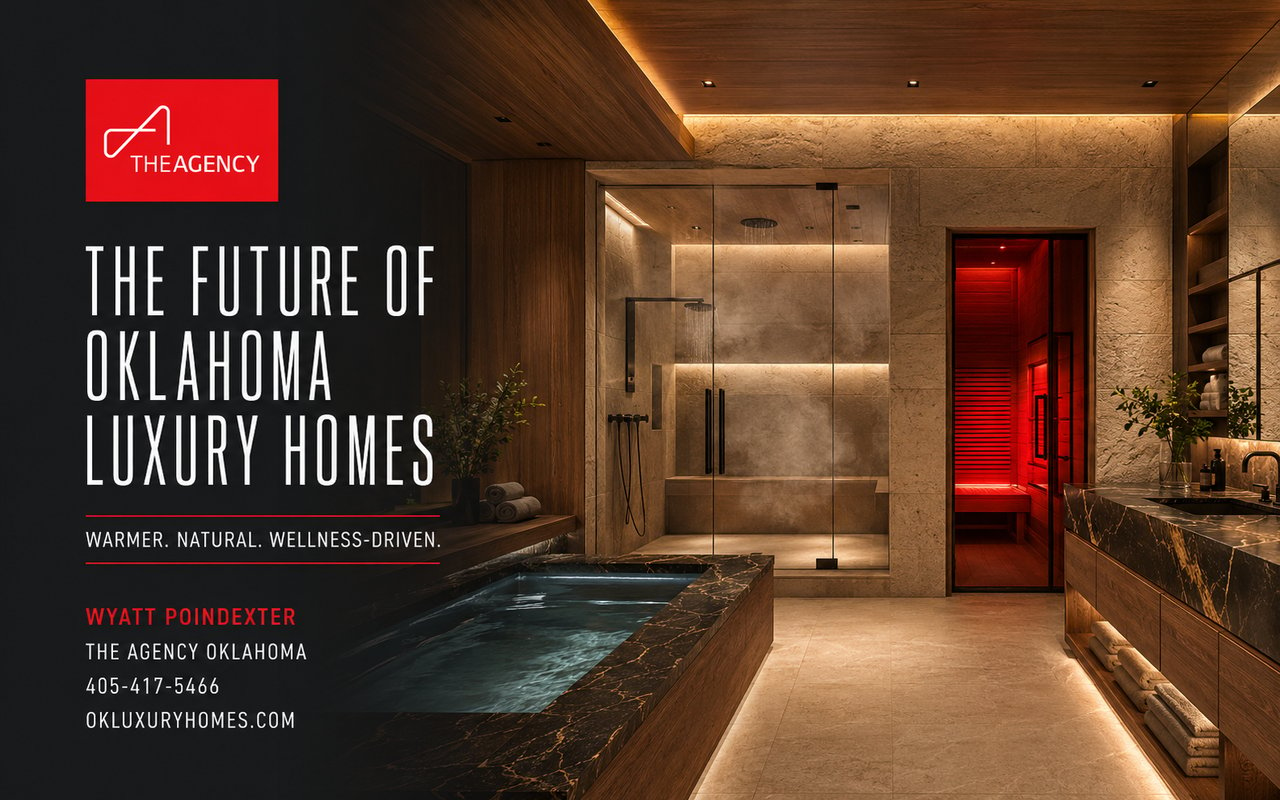
Natural woods are returning. Stone is becoming more textured. Bathrooms are evolving into private resort-style wellness suites. Cold plunges, steam showers, saunas and red-light therapy rooms are moving from commercial spas into private residences. Technology remains important, but buyers increasingly want it concealed within the architecture rather than dominating every room.
After more than 31 years in Oklahoma real estate, I have watched luxury trends come and go. The clearest shift I see today is that affluent buyers are no longer impressed by size alone. They are looking for homes that improve the way they live, entertain, recover and spend time with their families.
The future of luxury is not simply having more. It is having a home that feels better.
The All-White Interior Is Losing Its Influence
The modern white interior became popular because it photographed beautifully and created a clean, open appearance. Over time, however, the style became so common that many homes began to look nearly identical.
White cabinetry, white quartz, gray flooring and bright white walls were repeated from entry-level construction to multimillion-dollar custom homes. What once felt modern and fresh eventually became predictable.
Luxury buyers are now looking for individuality, warmth and craftsmanship.
This does not mean white is disappearing. Instead, stark white is being softened with warmer off-whites, creams, taupes, light browns and natural textures. White oak, walnut, pecan and richly stained cabinetry are replacing many painted surfaces.
The National Kitchen & Bath Association’s 2026 Bath Trends Report supports this movement. Its survey of nearly 700 industry professionals found that organic and natural design is expected to remain highly influential, while wood-faced vanities have overtaken painted vanities in projected popularity. NKBA 2026 Bath Trends Report
The best new luxury homes will not feel dark or dated. They will combine modern architecture with natural materials that provide depth, contrast and permanence.
Natural Wood Is Back
Natural wood may be the most important material returning to luxury residential design.
We are seeing it in kitchen cabinetry, bathroom vanities, ceilings, beams, doors, wall treatments, offices and custom furniture. Warm oak, walnut and pecan add character that painted cabinetry cannot always replicate.
At the 2026 Kitchen and Bath Industry Show, warm woods appeared throughout cabinetry, vanities and architectural details. Designers are using deeper, more expressive wood tones to make contemporary spaces feel grounded and inviting. Houzz 2026 Kitchen and Bath Trends
The key is balance.
A home does not need wood on every wall. One beautifully designed walnut kitchen, a white oak ceiling, natural beams or custom wood doors can completely change how a space feels.
In Oklahoma, this trend works especially well. Natural materials complement our wooded acreages, ranch properties, lake homes and contemporary estates. They create a connection between the house and the land surrounding it.
Bathrooms Are Becoming Private Resorts
The primary bathroom is rapidly becoming one of the most important rooms in a luxury home.
Buyers are no longer satisfied with a large bathtub, two vanities and an oversized shower. They want an experience comparable to what they would find at a five-star hotel or private resort.
The new luxury bathroom may include:
Steam showers, oversized rainfall shower systems, multiple shower heads, heated floors, towel warmers, integrated benches, aromatherapy, chromotherapy lighting, smart toilets, hidden televisions, refrigerated cosmetic storage, fireplace features, private courtyards and direct access to an outdoor shower or cold plunge.
According to the NKBA report, 77% of surveyed professionals expect hotel and resort experiences to influence bathroom design. Fifty-five percent said a larger shower is now more important than a bathtub, creating room for steam, sauna features, integrated seating and other spa-like amenities.
The bathroom is no longer being designed solely for appearance. It is becoming a private place for recovery, relaxation and daily wellness.
Steam Showers and Saunas Are Becoming Expected
Steam showers and private saunas were once considered unusual upgrades. In the upper end of the market, they are quickly moving toward the mainstream.
A properly designed steam shower can be incorporated into the primary bathroom without requiring a separate room. It provides a resort-like experience while preserving a clean architectural appearance.
Saunas are also becoming more integrated and attractive. Instead of looking like commercial gym equipment placed in an unused corner, the newest versions feature natural wood, glass walls, concealed controls and lighting designed to complement the rest of the home.
For Oklahoma luxury buyers, these features can be especially attractive when combined with a private fitness room, massage room, pool bath or dedicated recovery suite.
Cold Plunges Are Moving Inside the Home
Cold plunges have become one of the most requested additions to modern wellness spaces.
Some homeowners install them outdoors near a pool or sauna. Others create dedicated indoor recovery rooms with waterproof surfaces, proper drainage and temperature controls.
The best designs do not treat the cold plunge as an afterthought. They create a complete sequence: exercise, heat, cold and recovery.
A luxury wellness suite might include a gym, sauna, steam shower, cold plunge, hydration station, towel storage and access to an outdoor living area. When designed correctly, these spaces feel like a private health club rather than a collection of equipment.
This is particularly important for professional athletes and health-conscious buyers who want recovery amenities available without leaving home.
Red-Light Therapy and Dedicated Recovery Rooms
Red-light therapy rooms are another emerging feature in high-end residential design.
Rather than placing wellness equipment inside a bedroom or home gym, luxury homeowners are creating purpose-built recovery rooms. These spaces may incorporate red-light therapy panels, massage tables, stretching areas, sound therapy, meditation spaces and specialized lighting.
The broader movement is sometimes described as “invisible wellness”—health-oriented features incorporated naturally into the architecture. That can include circadian lighting, enhanced air and water filtration, acoustic treatments, automated shades and calming natural materials in addition to saunas, cold plunges and recovery spaces.
The goal is not to make the house feel like a medical facility. The goal is to create beautiful spaces that quietly support the homeowner’s preferred lifestyle.
Luxury Technology Is Becoming Invisible
Technology will remain extremely important in luxury homes, but the way it is presented is changing.
A few years ago, having multiple screens and control panels throughout a home was considered impressive. Today, the best technology is often the technology you barely notice.
Buyers want lighting, climate control, music, televisions, shades, security cameras, gates and pool systems controlled from one simple platform. They do not want walls covered with switches or a collection of unrelated apps.
The next generation of luxury technology will be integrated into cabinetry, mirrors, walls and architectural details. Televisions will appear as artwork or disappear completely. Charging stations will be concealed inside drawers. Speakers will be installed within ceilings and walls. Automated shades will retract into hidden pockets.
Luxury technology should simplify the home rather than make it more complicated.
Statement Stone Is Replacing Generic Surfaces
Natural stone and stone-inspired surfaces with movement, depth and texture are becoming central design elements.
Quartzite, marble, limestone and dramatic slabs are being used for kitchen islands, fireplaces, bathroom walls and custom architectural features. Instead of covering every surface with the same material, designers are selecting one exceptional stone and allowing it to become the artwork.
Quartzite has become particularly influential because it can provide the movement and luxury associated with marble while offering practical performance when selected and maintained correctly.
In the strongest designs, stone is paired with natural wood, plaster walls, aged metals and warmer lighting. The result feels collected and permanent rather than newly manufactured.
Soft Curves Are Replacing Harsh Lines
Modern homes are also becoming less rigid.
Arched openings, rounded kitchen islands, curved staircases, sculptural furniture and softened architectural edges are bringing movement into contemporary interiors.
This does not mean returning to ornate traditional design. It means creating modern spaces that feel more comfortable and human.
Curves can also improve the flow of large entertaining spaces. A gently rounded island or staircase can become a major architectural feature without making the home feel overly formal.
Kitchens Will Look More Like Furniture
The luxury kitchen is becoming less industrial and more integrated with the home.
Instead of rows of identical white cabinets, we are seeing furniture-inspired cabinetry, natural wood finishes, concealed appliances and carefully designed secondary kitchens.
The main kitchen can remain beautiful and open for entertaining while a separate catering kitchen, prep kitchen or scullery handles food preparation, countertop appliances and cleanup.
Luxury buyers increasingly appreciate:
Large workstation sinks, concealed appliance garages, integrated refrigeration, oversized pantries, specialty ice makers, coffee bars, refrigerated drawers, secondary dishwashers and hidden storage designed specifically around the homeowner.
A truly custom kitchen should reflect how the owner lives. It should not simply repeat the same layout seen in every speculative home.
Outdoor Living Is Becoming a Year-Round Experience
Oklahoma luxury homes need outdoor spaces that can function through changing weather.
A covered patio and swimming pool are no longer enough at the highest price points. Buyers want complete outdoor environments with kitchens, fireplaces, televisions, heaters, retractable screens, motorized shades, pool houses, outdoor showers and comfortable spaces for year-round entertaining.
The best outdoor spaces feel like an extension of the home. Flooring, lighting, cabinetry and materials flow naturally from inside to outside.
On larger Oklahoma properties, buyers may also want private ponds, pickleball courts, putting greens, sports courts, trails, guesthouses, workshops and secure storage for recreational vehicles.
Luxury in Oklahoma often includes something buyers cannot easily find in larger cities: space, privacy and land.
Practical Luxury Is Growing in Importance
Not every valuable trend is visually dramatic.
Whole-home generators, advanced storm shelters, impact-resistant roofing, water filtration, air purification, energy-efficient windows and sophisticated drainage systems may not create the most exciting listing photographs, but they can be extremely valuable to an Oklahoma buyer.
Today’s luxury client is often highly informed. Buyers want beautiful finishes, but they also ask about the roof, mechanical systems, technology infrastructure, security, energy efficiency and ongoing maintenance.
The most successful luxury homes combine design with durability.
Timeless Design Will Outperform Trend-Driven Design
The greatest danger in luxury construction is spending heavily on a style that already feels dated when the home reaches the market.
A buyer may replace paint, light fixtures or furnishings. Replacing an entire kitchen, flooring system or architectural identity is far more expensive.
The smartest luxury homes use authentic materials, thoughtful proportions and exceptional craftsmanship as their foundation. Trends can then be introduced through elements that are easier to update.
Natural wood, stone, quality metalwork and well-designed architectural details typically age better than inexpensive materials attempting to imitate them.
Luxury should feel current, but it should never feel temporary.
What This Means for Oklahoma Sellers
Owners preparing to sell do not need to reconstruct their homes around every new trend.
The goal should be to identify which improvements will genuinely affect buyer perception and marketability.
In some homes, replacing cool gray paint with a warmer neutral may make an enormous difference. In others, updating lighting, refinishing cabinetry, improving the primary bathroom or creating a better connection to the outdoor living area may provide the strongest result.
Before making a major investment, sellers should consult a Realtor who understands the Oklahoma luxury market and knows what today’s buyers are actually requesting.
The most expensive improvement is not always the most valuable improvement.
What This Means for Oklahoma Buyers
Buyers should look beyond what is currently popular and consider how the home will live five or ten years from now.
Ask whether the floor plan supports wellness, privacy, entertaining and multigenerational living. Look at the quality of the materials beneath the styling. Consider whether the technology is unified and serviceable. Determine whether future additions such as a sauna, cold plunge, elevator, generator or guesthouse can be added efficiently.
A great luxury home should adapt as the owner’s lifestyle changes.
Wyatt Poindexter and The Agency Oklahoma
With more than 31 years of real estate experience, Wyatt Poindexter is a Managing Partner of The Agency Oklahoma and one of the state’s leading luxury real estate professionals.
Wyatt has surpassed $1 billion in career sales and closed more than 1,000 homes. He achieved a record year of $155 million in sales and has represented some of Oklahoma’s most distinctive luxury homes, estates, ranches, lake properties and private resorts.
In 2026, Wyatt was ranked the No. 1 Realtor in Oklahoma for sales volume, recognized among the top 1% of agents within The Agency and voted Best Realtor by The Gazette.
He is a Certified Luxury Home Marketing Specialist and has earned the prestigious GUILD Elite designation.
With more than 125,000 followers across social media, Wyatt has built one of Oklahoma’s most visible real estate platforms. His luxury listings and marketing campaigns have received national and international exposure through Mansion Global, ESPN, Realtor.com, Homes.com, Zillow Gone Wild, Bleacher Report and other major media outlets.
Through The Agency Oklahoma, Wyatt combines decades of local market knowledge with global marketing, innovative technology, international public relations and a highly personalized approach to luxury real estate.
The Future of Oklahoma Luxury Real Estate
The future of luxury homes in Oklahoma will not be defined by white walls or square footage alone.
It will be defined by how a home feels.
Warm natural woods, authentic stone, resort-style bathrooms, steam showers, saunas, cold plunges, red-light therapy rooms, private fitness spaces, invisible technology and complete outdoor environments are changing what buyers expect from an exceptional property.
Luxury is becoming more personal, more restorative and more connected to everyday life.
The homes that lead Oklahoma’s next generation of luxury real estate will not simply be impressive places to see. They will be extraordinary places to live.
Wyatt Poindexter
Managing Partner | The Agency Oklahoma
Oklahoma Luxury Real Estate
405-417-5466
www.OKLuxuryHomes.com