Something Is Coming to Downtown Edmond That Oklahoma Has Never Quite Seen Before
I have lived in the Edmond area for a long time, and in 31 years of selling Oklahoma luxury real estate I have watched this city grow from a quiet suburban community into one of the most desirable addresses in the entire state. But what is about to rise at 309 South Littler Avenue in the heart of downtown Edmond is something different. Something that does not just add square footage to a city block but actually changes what it means to live here. It is called The Townsend, and if you care at all about architecture, walkability, craft, community, or the future of Edmond, you need to know about it.
What Is The Townsend?
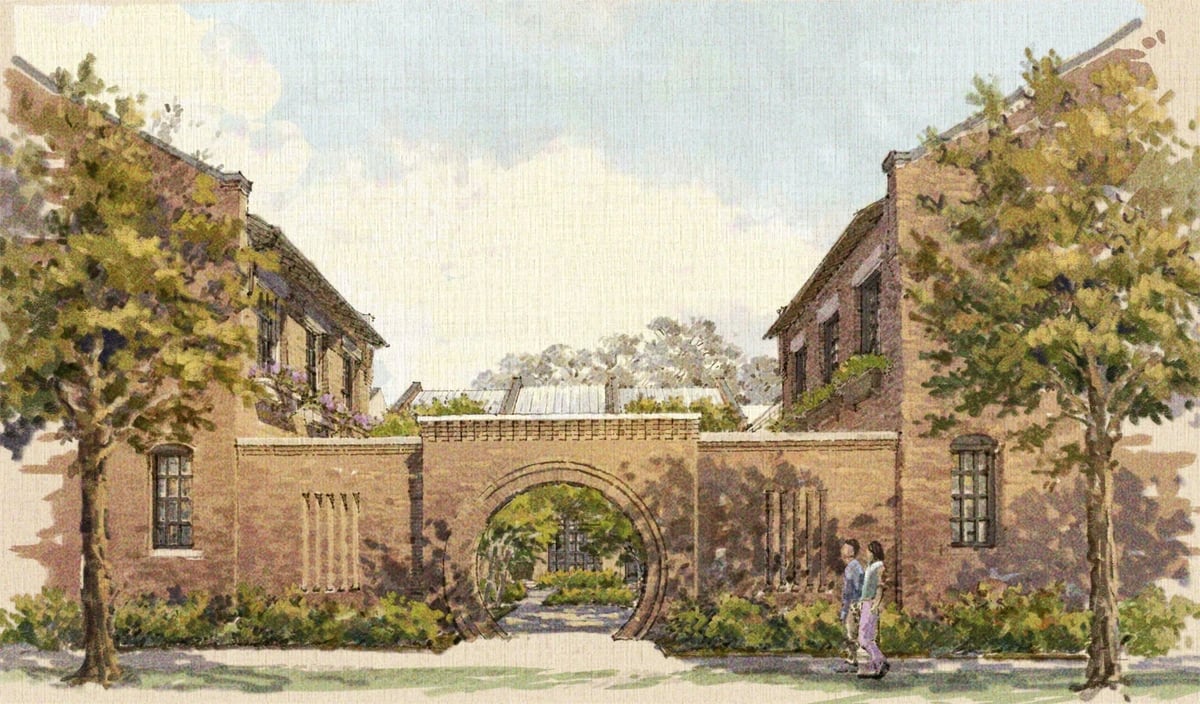
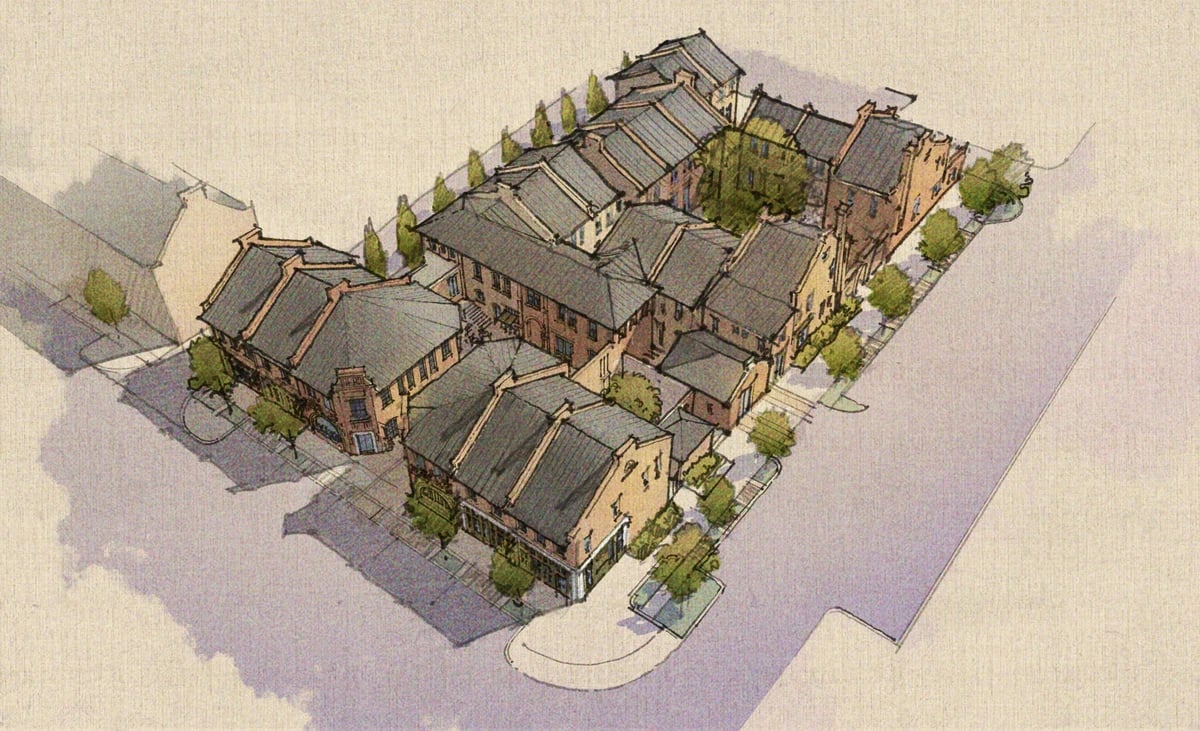
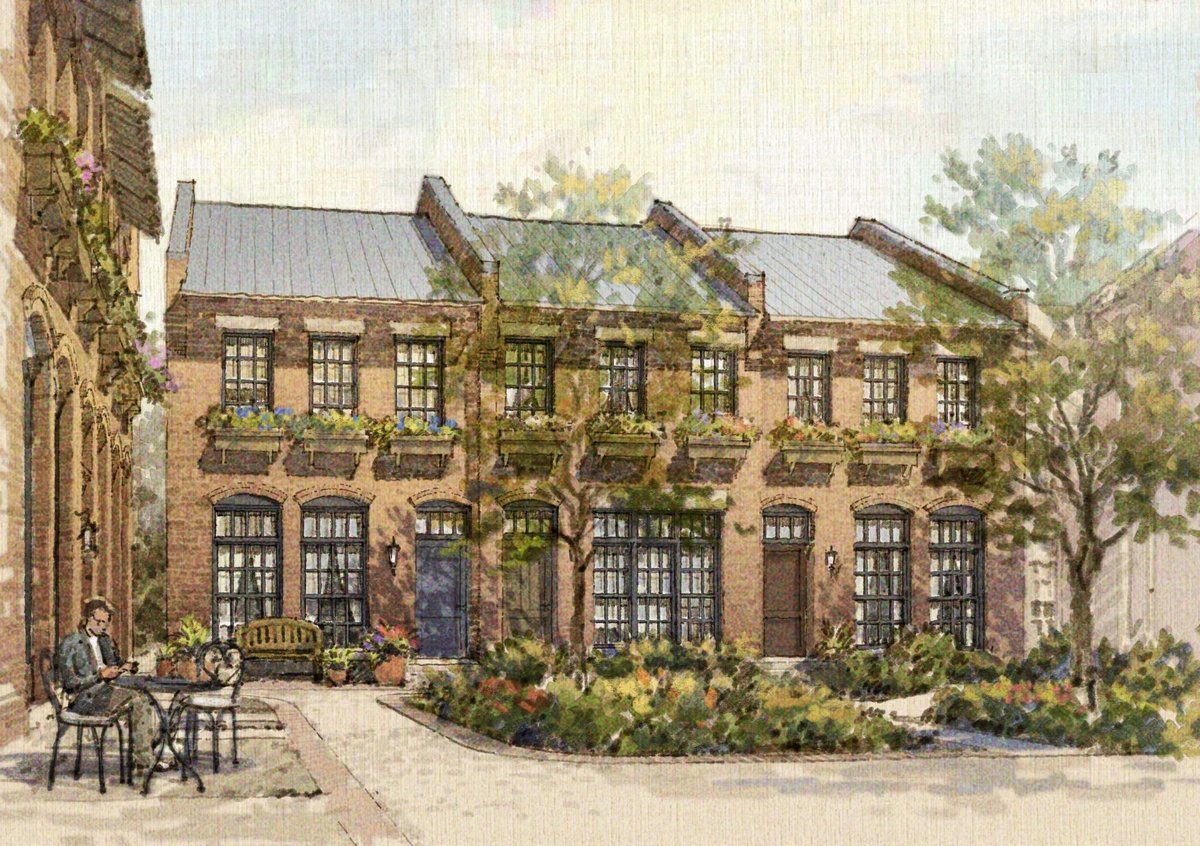
The Townsend is the flagship neighborhood development from Building Culture, a vertically integrated design, build, and development firm based in Oklahoma City led by founder and CEO Austin Tunnell. It is a walkable mixed-use block in the heart of downtown Edmond, bringing together workspace, live-work units, and for-sale townhomes woven around shared courtyards, designed and developed entirely in-house by the same team that will build it. That last detail matters more than it might initially sound, and I will come back to it.
The project unfolds in phases. Phase One, now under construction, introduces Apollo Workspace alongside two live-work residences centered around shared courtyards, with an anticipated opening in spring 2027. Phase Two will bring twelve townhomes to market, ranging from 1,200 to 2,500 square feet, with pre-sales beginning in fall 2026. Phase Three adds six additional townhomes on the south block. When it is fully realized, The Townsend will be one of the most thoughtfully executed mixed-use developments in the entire state of Oklahoma, and I say that having spent three decades watching what gets built and what lasts.
What Makes This Different From Everything Else Being Built
Here is the part that genuinely excites me, and the reason I wanted to write about this in depth. Most of what gets constructed in America today, even attractive, well-marketed new construction, is essentially a performance. The facade looks like something. The interior finishes photograph well. But pull back the curtain and you will find light-gauge steel framing, engineered wood products, synthetic materials, and thin brick veneer clipped onto the outside of a building that was never designed to age gracefully. It was designed to be sold.
The Townsend is built on an entirely different premise. Apollo Workspace, which anchors the entire block, is constructed with structural brick masonry, the way the historic districts we love were made to stand for centuries. The rest of The Townsend is held to that same standard of craft and quality. This is not a design choice made for aesthetics alone, although the aesthetic result is extraordinary. It is a philosophical commitment to building something that will still be standing and still be beautiful a hundred years from now.
The Man Behind the Brick: Austin Tunnell and Building Culture
To understand why The Townsend is significant, you have to understand Austin Tunnell and the unusual path he took to build it. After a brief stint as a CPA and two years in the Peace Corps, Tunnell came back convinced that the way we design our homes, streets, and neighborhoods quietly shapes our health, our relationships, and the quality of everyday life, and that most of what has been built in America over the past fifty years does the opposite. So he apprenticed under a master mason and timber framer, learned to build with his hands, and started a company to do the work differently.
That apprenticeship brought him into the orbit of one of the most remarkable builders working in America today, Clay Chapman of Artisan Trades, who has become the standard-bearer of the structural masonry revival movement in this country. Clay Chapman is part artist, part philosopher, and part builder, and his buildings have captured the attention and imaginations of everyone who has seen them. He has trained a number of people in structural masonry, including Austin Tunnell of Building Culture. That lineage matters, because what Chapman passed on to Tunnell was not just a technique. It was a worldview.
The Art and Science of Structural Brick Masonry
Most people today have never lived in a building constructed the way The Townsend is being built, so it is worth explaining what structural brick masonry actually means and why it is so dramatically different from what we typically see in new construction.
Modern homes built with traditional structural masonry techniques leverage centuries-old methods to address a variety of contemporary building challenges including sustainability, rising energy costs, and housing affordability. The result is not historical replication or novelty. It is modern construction that will last generations.
The three-wythe walls that define this style of construction have been studied by teams from Clemson University, who confirmed the efficiency of the mass-wall approach in the regional climate. Beyond the manufacture and transport of the brick itself, there is very little embodied energy in this method of building, particularly when you consider the extraordinary longevity of the structures. In other words, when you build something that lasts three hundred years, the environmental math looks very different than when you build something that needs to be replaced in forty.
Clay Chapman has more than 30 years of building experience and has designed and built a variety of unique and often celebrated structures ranging from period homes to horse stables and chapels. As a master mason and timber framer, he leans heavily on his background in fine arts, with concentrations in sculpting and painting. The mass wall masonry buildings he constructs combine centuries of precedence with modern technology to create tastefully designed structures that will simply be maintained and loved for many generations. That is the tradition Austin Tunnell learned from, and that is the tradition now being brought to downtown Edmond.
The Brick Industry Association has noted that buildings constructed this way demonstrate both the versatility of brick and the honesty of materials, with a projected lifespan quantified in centuries rather than decades, carrying important sustainability and energy efficiency implications.
What This Means for Edmond
I want to step back for a moment from the architecture and talk about what The Townsend means to this city, because I think that story deserves to be told.
Downtown Edmond has been on a genuine run. New restaurants, new boutiques, new residential development, and a growing energy that feels earned rather than manufactured. But most of what has come has been fairly conventional in its ambition. Nice, even very good, but not transformative in the way that changes how a city thinks about itself.
The Townsend reflects a belief that development can once again serve people and place rather than just profit. It is described as a prototype for how Building Culture hopes to build across America, one neighborhood at a time, rooted in craft, culture, and long-term stewardship. When a project of this philosophical seriousness and material quality plants itself in the heart of your downtown, it raises the standard for everything that comes after it. It tells the world that Edmond is not just growing. It is becoming.
The team at Building Culture operates around a simple strategy: build vibrant, charming, and meaningful places and hold them long-term. The way the best places have always been built. That long-term stewardship mentality is exactly what a city's most important corridors need from the people who develop them.
As someone who has spent my entire career at the intersection of Oklahoma real estate and the people who invest in it, I can tell you with certainty that what Building Culture is doing with The Townsend is the kind of project that quietly becomes the thing a city points to twenty years from now and says, that was the moment something changed. Edmond has produced a lot of impressive real estate over the years. This is something rarer than impressive. This is lasting.
If you want to learn more about The Townsend, pre-sales for the townhomes begin in fall 2026, and I would encourage anyone interested in owning a piece of something genuinely exceptional in downtown Edmond to pay close attention. These will not be ordinary homes. They will be generational ones.
Wyatt Poindexter | Managing Partner | The Agency Oklahoma City & Tulsa | 405-417-5466 | www.OKLuxuryHomes.com | 31 years of selling Oklahoma's finest estates and homes | Elite Guild Member of The Institute of Luxury Home Marketing | Ranked #1 Realtor in the State of Oklahoma for Volume | 2026 RealTrends Verified #1 Realtor for Volume in the State of Oklahoma