Looking at gated luxury communities in Edmond can feel simple at first glance. Then you realize the real differences are not just the gate at the entrance, but the lot size, street ownership, amenities, design rules, and day-to-day upkeep that shape how you live. If you want a community that fits your lifestyle now and still makes sense later, this guide will help you compare the details that matter most. Let’s dive in.
What matters beyond the gate
In Edmond, a gated entrance is only one part of the story. The bigger value often comes from what is behind it, including mature landscaping, greenbelts, private amenities, and how consistently the neighborhood is maintained.
That matters in a city where tree canopy and tree preservation are treated as meaningful community assets in planning materials. In practical terms, that helps explain why established landscaping and preserved green space often carry real appeal in Edmond’s luxury market.
Start with your lifestyle goals
Before you compare homes, get clear on the kind of living experience you want. Some buyers want a lock-and-leave setup with smaller lots and shared amenities, while others want more land, more privacy, and a quieter estate feel.
A community can look beautiful online and still be the wrong fit for your routine. If you travel often, prefer lower exterior upkeep, or want amenities close at hand, your priorities may be very different from someone who wants a larger homesite and more separation from neighbors.
Low-maintenance luxury
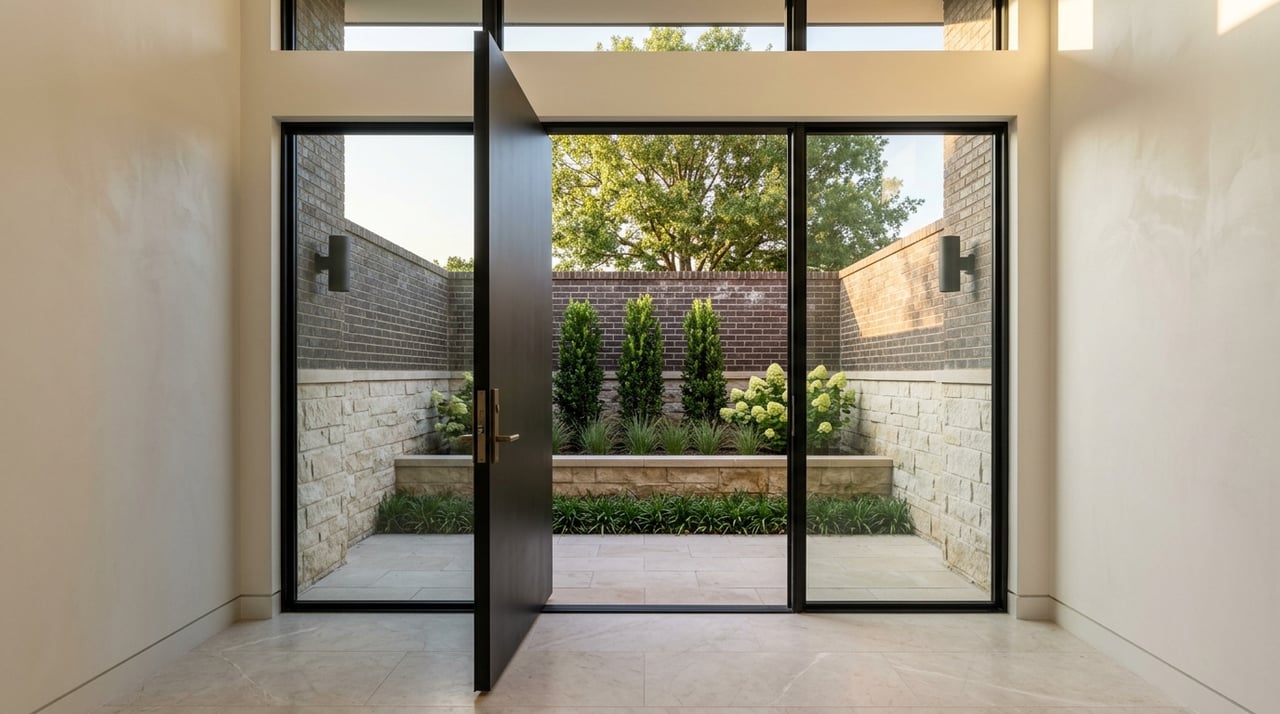
If convenience is high on your list, smaller-lot gated communities may deserve a closer look. Waterstone, for example, is described as a gated enclave with 65 homesites, 13 greenbelt sites, courtyard-style residences, masonry privacy walls, and a clubhouse, fitness center, pool, and golf simulator.
Recent listings there show lots around 6,100 to 7,700 square feet. That type of setup may appeal to buyers who want luxury finishes and amenities without taking on the feel of a large estate property.
Larger lots and more breathing room
If space is the priority, lot size becomes a major filter. Timberland Creek markets itself as a gated North Edmond community with 3/4-acre lots and a countryside feel, while recent listings in communities like Highgarden and The Oaks at Oak Tree show homesites that can be notably larger than some courtyard-style enclaves.
That extra land can change everything from privacy to outdoor entertaining to future resale appeal. It also often comes with different maintenance expectations, so it is important to understand exactly what the HOA covers and what stays on your plate.
Compare Edmond communities by identity
The strongest gated luxury communities usually have a clear identity. That does not mean one is better than another. It means each tends to attract a different kind of buyer.
When you understand that identity, it becomes easier to narrow your search and avoid touring neighborhoods that do not match your goals.
Golf and club-adjacent living
The Oaks at Oak Tree is a gated neighborhood of 74 traditional homes adjacent to Oak Tree Country Club and Oak Tree National. The HOA describes amenities that include a private clubhouse, pool, and tennis courts, and recent listings show homesites roughly in the 7,400 to 10,600 square foot range.
Rose Creek is another example of a community tied closely to a club environment. A current listing describes the neighborhood as gated with 24-hour security, plus clubhouse, restaurant, bar and grill, fitness, and aquatic facilities.
Amenity-rich neighborhood feel
Highgarden offers a different experience. Its HOA describes approximately 260 homes across four phases in gated East Edmond, with amenities including a pool, fitness center, playground, and stocked pond.
City planning materials for Phase 1 describe private streets and lots generally measuring 75 by 145 feet. That points to a community with both structure and scale, which can appeal to buyers who want amenities and a more established neighborhood setting.
Smaller enclave with design consistency
Waterstone stands out for architectural control and a more curated aesthetic. The community advertises architectural styles ranging from Contemporary to Transitional to French, and it requires final approval of home designs before construction.
That kind of oversight can be a plus if you value visual consistency and a more polished streetscape. It can also mean stricter rules, which is why reviewing the governing documents early is so important.
Private section within a larger community
Fenwick Garden Village adds another wrinkle. It is a gated sub-association within the larger Fenwick community, with 169 homes in the gated section and more than 700 homes in the broader neighborhood.
The sub-association owns and maintains its private streets and gated entrances, while the larger community shares amenities such as a pool, clubhouse, trails, ponds, and events. Buyers should pay close attention to how dues and responsibilities are divided in setups like this.
Understand streets, gates, and maintenance
One of the biggest quality-of-life questions in a gated community is who maintains what. Private streets, gates, landscaping, and common areas all cost money, and those costs can show up differently from one HOA to another.
In Edmond, that distinction is not theoretical. Highgarden’s planning materials describe private streets, and Fenwick Garden Village states that its sub-association owns and maintains private streets and gates.
That is why you should ask very direct questions such as:
- How does gate access work?
- What do the dues actually cover?
- Who maintains streets, gates, landscaping, and common areas?
- Are fences, sheds, RVs, or rentals allowed?
- Is the neighborhood fully built out or still under construction?
The answers can affect your monthly costs, your convenience, and even how quiet or settled the neighborhood feels.
Gate access is not always the same
Buyers often assume all gated communities function in the same way, but Edmond examples show otherwise. Oak Tree says resident and member decals are used and gate entry is validated, with up to five decals free per household and additional decals available for a fee.
Highgarden also separates general HOA matters from gate access and fob issues. Details like this may seem small, but they can affect guests, vendors, deliveries, and your day-to-day ease of living.
Review HOA documents before you fall in love
A beautiful kitchen is easy to notice. Restrictive covenants are not. In gated luxury communities, the HOA documents can shape your ownership experience just as much as the house itself.
Before comparing finishes too closely, ask for the CC&Rs, bylaws, current budget, fine schedule, architectural guidelines, and any reserve or special-assessment history. These documents can reveal whether the community is tightly controlled, financially stable, or likely to face future costs.
Waterstone, for example, requires final design approval before construction. Rosewood publicly posts covenants, bylaws, HOA information, and clubhouse rules, while Oak Tree provides specific rules tied to decals and access.
Think about build-out and future feel
A neighborhood that is fully built out often lives differently from one still under development. If construction is complete, you may have a clearer sense of the streetscape, traffic, noise level, and overall look of the community.
Rosewood Estates notes that home construction is complete. That may appeal to buyers who want a more settled environment, while a still-growing community may offer newer inventory or the chance to build within current design standards.
Location still drives convenience and resale
Even in the luxury segment, location matters because it shapes your routine and broadens or narrows the future buyer pool. A community’s position relative to clubs, shopping, medical hubs, highways, or Downtown Edmond can influence both daily convenience and long-term marketability.
Waterstone markets access to Nichols Hills Plaza, Whole Foods, Mercy, Integris, OU Medical Center, and St. Anthony Healthplex. Rosewood is about three miles north of Quail Springs Mall, Timberland Creek markets a 15-minute drive to Downtown Edmond, Highgarden sits east of Douglas and south of Sorghum Mill, and The Oaks sits next to Oak Tree Country Club and Oak Tree National.
When you compare communities, think beyond commute time. Consider where your guests come from, how often you use nearby amenities, and what location story may matter to a future buyer.
Sellers should market the lifestyle details
If you plan to resell in the future, the best marketing angle is rarely just “gated community.” Buyers respond more clearly when the neighborhood story is specific.
That story might be golf and club access, low-maintenance courtyard living, larger lots with mature trees, or strict architectural consistency. HOA inclusions also matter because bundled services such as gate service, private-street maintenance, lawn care, exterior painting, clubhouse access, security, or architectural oversight affect both carrying costs and perceived convenience.
Why Edmond buyers should be extra careful
In Oklahoma, a gated-community purchase should be reviewed as both a property transaction and an association transaction. The Oklahoma Real Estate Commission’s current residential sales forms and 2025 RPCD guide point buyers and sellers to statutory property-condition disclosure, disclaimer, exemption, and broker-service forms.
That makes careful document review especially important. You are not just buying square footage. You are also stepping into a system of rules, maintenance obligations, and financial commitments that can shape your ownership experience.
How to choose with confidence
The right gated luxury community in Edmond depends on how you want to live. Some buyers want curated design, private amenities, and a lower-maintenance footprint. Others want a larger homesite, a more private setting, or proximity to club life and key destinations.
The best choice usually becomes clear when you compare communities through the right lens: lot size, maintenance structure, amenities, design control, build-out status, and location. If you look closely at those factors before you buy, you are far more likely to land in a neighborhood that fits both your lifestyle and your long-term goals.
If you are weighing gated luxury options in Edmond and want discreet, high-touch guidance, Wyatt Poindexter can help you compare communities, review the details that affect value, and find the right fit with confidence.
FAQs
What should you compare first in Edmond gated luxury communities?
- Start with lot size, HOA coverage, street ownership, amenities, architectural rules, and whether the neighborhood is fully built out or still under construction.
How do HOA rules differ in Edmond gated communities?
- Edmond communities can differ on gate access, design approval, maintenance responsibility, and rules for items such as fences, sheds, RVs, or rentals, so you should review the governing documents early.
Which Edmond gated communities offer smaller, lower-maintenance lots?
- Waterstone is one example, with recent listings showing lots around 6,100 to 7,700 square feet and a courtyard-style concept with shared amenities.
Which Edmond gated communities offer larger lots?
- Timberland Creek markets 3/4-acre lots, and recent listings in places like Highgarden and The Oaks at Oak Tree show larger homesites than some smaller luxury enclaves.
Why do private streets matter in an Edmond gated neighborhood?
- Private streets can affect HOA responsibilities, dues, maintenance standards, and the overall ownership experience, which is why buyers should confirm who maintains streets and gates.
How does location affect resale in Edmond luxury communities?
- Location can influence convenience and buyer demand, especially when a community is close to clubs, shopping, medical centers, highways, or Downtown Edmond.