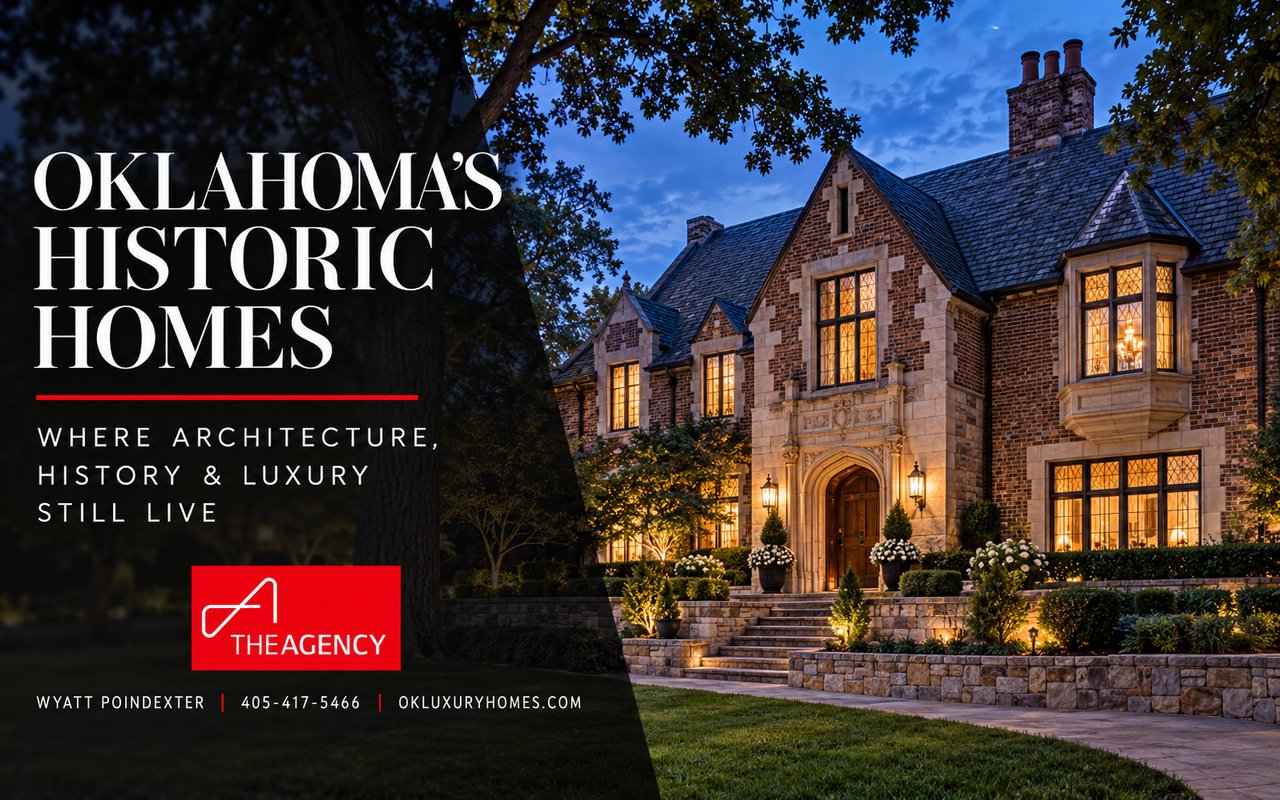
Oklahoma’s Historic Homes: Where Architecture, History and Luxury Still Live
A historic home is never just a collection of bedrooms, bathrooms and square footage. It is craftsmanship that has survived generations. It is an arched doorway shaped by hand, a staircase worn smooth by a century of footsteps, leaded-glass windows glowing in the afternoon sun and a front porch that has quietly watched an entire city grow around it.
Oklahoma may be relatively young compared with many states, but its historic homes tell a remarkable story. They reflect the Land Run, the arrival of the railroad, the oil boom, the rise of Oklahoma City and Tulsa, the growth of the University of Oklahoma and the vision of architects who created residences with a level of detail that would be extraordinarily expensive to reproduce today.
From Heritage Hills, Mesta Park, Crown Heights, Edgemere Park and Linwood Place in Oklahoma City to Maple Ridge and Swan Lake in Tulsa, the University and Chautauqua neighborhoods of Norman, and the Victorian streets of Guthrie, Oklahoma offers an extraordinary collection of historic architecture.
These homes deserve more than an ordinary real estate approach. They require experience, research, thoughtful presentation and an agent who understands that the story of the property may be just as valuable as the property itself.
Heritage Hills: The Grand Address of Oklahoma City
Heritage Hills is one of Oklahoma City’s most distinguished historic neighborhoods. Developed during the early decades of the 20th century, it became home to many of the city’s prominent business leaders, civic figures and pioneering families.
The neighborhood is known for stately residences, mature trees, generous lots and impressive architectural variety. Buyers can find examples of Colonial Revival, Georgian, Tudor Revival, Italian Renaissance, Neoclassical, Prairie School, Mediterranean and Craftsman design—sometimes within only a few blocks.
What makes Heritage Hills special is not simply the size of its homes. It is the quality of the original craftsmanship: substantial millwork, grand staircases, hardwood flooring, ornate plaster, masonry fireplaces, leaded glass, formal gardens and proportions rarely seen in modern construction.
For Wyatt Poindexter, Heritage Hills also carries a personal connection. He grew up visiting his grandparents on Northwest 19th Street, creating an appreciation for the neighborhood long before he began selling real estate. That history gives him more than professional familiarity with the area; it gives him an understanding of how these homes feel and why generations of Oklahoma families remain drawn to them.
Mesta Park: Historic Character With a Strong Sense of Community
Adjacent to Heritage Hills, Mesta Park has its own distinct personality. Its inviting streets are lined with historic homes featuring broad porches, original woodwork, welcoming front walks and an architectural scale that feels elegant without losing its warmth.
Craftsman bungalows, Prairie-influenced homes, Colonial Revival residences and Tudor designs help create the neighborhood’s recognizable character. Mesta Park attracts buyers who want history, walkability, community involvement and convenient access to Midtown, Uptown 23rd, downtown Oklahoma City and the Asian District.
Many homes in Mesta Park have been carefully updated for modern living while retaining their original architecture. The best renovations respect the home’s identity. A new kitchen can provide every contemporary convenience while preserving the original windows, flooring, millwork and room proportions that make the property irreplaceable.
Crown Heights and Edgemere Park: Design That Still Feels Timeless
Crown Heights is known for its picturesque streets, elegant homes and collection of Tudor Revival, Colonial Revival, French Eclectic and traditional architecture. Built primarily during Oklahoma City’s early growth years, the neighborhood offers a polished residential setting near some of the city’s most active dining, retail and cultural districts.
Nearby Edgemere Park represents an early example of thoughtfully planned residential development. Created largely during the 1920s and 1930s, it was influenced by the garden-city movement and designed around green space, gently curving streets and the natural landscape. Tudor Revival is especially prominent, accompanied by Colonial Revival and Spanish Eclectic residences. The neighborhood includes more than 300 homes across approximately 103 acres, with significant space originally reserved for parks and greenbelts. Historic American Landscapes Survey
These neighborhoods demonstrate why historic design remains relevant. The streets were planned around people, landscaping and architecture—not simply the maximum number of homes that could fit on a piece of land.
Linwood Place, Gatewood and Putnam Heights
Linwood Place is another Oklahoma City neighborhood filled with architectural personality. Its tree-lined streets contain Craftsman bungalows, Tudor-inspired homes, Colonial Revival residences and other early-20th-century designs. Buyers are often drawn to the neighborhood’s central location, larger historic homes and sense of authenticity.
Gatewood, near the Plaza District, offers historic homes close to one of Oklahoma City’s most creative restaurant, arts and entertainment areas. The neighborhood’s Craftsman homes and bungalows appeal to buyers who value architecture and an active urban lifestyle.
Putnam Heights and Putnam Heights West feature larger historic residences, mature landscaping and impressive architectural variety. These homes can offer grand formal spaces, original fireplaces, extensive millwork and generous lots within minutes of downtown.
Other Oklahoma City neighborhoods with important historic character include Edgemere Heights, Jefferson Park, Paseo, Shepherd, Miller, Classen-Ten-Penn, Cleveland, Crestwood, Lincoln Terrace and the Medical Community area. Each has its own history, architectural identity and market.
Not every older neighborhood carries the same historic designation, and not every property is subject to identical preservation requirements. Buyers and sellers should verify the applicable zoning, district boundaries and renovation guidelines for the specific property.
Norman’s University, Chautauqua and Miller Neighborhoods
Norman’s historic homes are closely tied to the growth of the University of Oklahoma. Neighborhoods surrounding the campus contain bungalows, cottages, Tudor Revival residences, Colonial Revival homes and distinctive properties shaped by decades of university life.
The University and Chautauqua neighborhoods offer proximity to OU, Campus Corner, museums, athletics and the cultural energy of the university. Homes here can appeal to professors, alumni, university leaders, investors and families who want to become part of Norman’s traditions.
The Miller Historic District presents another side of Norman’s architectural history, with early homes and neighborhood character connected to the city’s development. Norman has adopted preservation guidelines intended to help protect significant architectural features and ensure that exterior changes within designated areas remain compatible with each district’s historic identity. City of Norman Historic Preservation Guidelines
A home near OU can also carry value beyond its architecture. It may become a gathering place for football weekends, graduations, alumni events and family traditions that continue for generations.
Tulsa’s Oil-Boom Architecture
Tulsa’s historic neighborhoods reflect the ambition and prosperity of the city’s oil-boom era.
Maple Ridge is one of Oklahoma’s most significant collections of historic luxury homes. Its grand residences display Colonial Revival, Tudor Revival, Italian Renaissance, Georgian, Mediterranean and Prairie School influences. Many were constructed for the entrepreneurs, oil executives and civic leaders who helped shape Tulsa.
Swan Lake offers picturesque streets, historic homes and a distinctive park-centered setting. Gillette, Yorktown, Brady Heights, North Maple Ridge and Tracy Park contribute additional layers to Tulsa’s architectural heritage. The Tulsa Preservation Commission identifies eight neighborhoods and sites that have received Historic Preservation overlay zoning, with exterior work in those areas generally requiring an HP permit. Tulsa Preservation Commission
Tulsa’s historic housing also includes Riverview, Florence Park, Owen Park, Sunset Terrace and several neighborhoods surrounding downtown and the Art Deco core. These areas give buyers access to character, location and architecture that cannot be duplicated by a typical new development.
Guthrie, Enid, Muskogee and Historic Communities Across Oklahoma
Guthrie contains one of Oklahoma’s greatest concentrations of territorial and early-statehood architecture. Its historic streets feature Victorian, Queen Anne, Italianate, Romanesque, Classical Revival and commercial architecture connected to Oklahoma’s earliest days.
Owning a historic property in Guthrie can feel like becoming the caretaker of a visible piece of state history. Turrets, elaborate porches, decorative masonry, tall windows and intricate woodwork create homes with undeniable presence.
Historic architecture can also be found throughout Enid, Muskogee, Ponca City, Bartlesville, Shawnee, Ardmore and Stillwater. Many of these communities grew through agriculture, railroads, energy, commerce and education, leaving behind neighborhoods filled with distinctive residences.
Bartlesville carries the influence of the oil industry and internationally significant design. Ponca City contains homes connected to the state’s energy history. Muskogee offers impressive early residences tied to its period as a major commercial center, while Enid’s historic neighborhoods reflect the city’s agricultural and railroad growth.
Oklahoma’s architectural story is not contained within one metropolitan area. It stretches across the state.
The Architectural Styles That Define Oklahoma’s Historic Homes
Oklahoma’s historic residences include an impressive range of architectural styles:
Colonial Revival homes are known for symmetry, formal entrances, classical columns and balanced proportions.
Tudor Revival homes often feature steep rooflines, prominent chimneys, arched openings, decorative masonry and combinations of brick, stone and stucco.
Craftsman homes emphasize broad porches, exposed structural details, natural materials, built-in cabinetry and functional floor plans.
Prairie School residences use horizontal lines, low-pitched roofs, deep overhangs and an emphasis on integrating the home with its landscape.
Mediterranean and Spanish Eclectic homes may include stucco exteriors, clay-tile roofs, courtyards, balconies and arched windows or doors.
Georgian and Neoclassical homes are recognized by their formality, symmetry, substantial columns and commanding street presence.
Queen Anne and Victorian residences can feature asymmetrical façades, towers, decorative woodwork, patterned masonry and elaborate porches.
Art Deco and Streamline Moderne influences appear in select homes and buildings, especially in Tulsa, where the architecture reflects the confidence and creativity of the oil-boom period.
Understanding these styles is important when preparing a historic home for sale. Marketing should identify meaningful features accurately rather than reducing every older residence to “charming” or “full of character.”
Selling a Historic Home Requires a Different Strategy
Historic homes cannot be marketed like ordinary properties. Their appeal often depends on details that do not appear in basic MLS data.
A successful presentation should explore the home’s architect, builder, original owner, construction period, architectural style, significant renovations and connection to its neighborhood. Original plans, historic photographs, newspaper articles and ownership history may help tell a richer story.
Professional photography must capture craftsmanship, scale and atmosphere. Detailed images of millwork, hardware, windows, fireplaces, flooring and architectural transitions can be just as important as wide photographs of the major rooms. Video should allow buyers to experience how the home unfolds, while written marketing should explain why the property is significant.
Pricing also requires care. Square-foot comparisons alone may overlook architectural pedigree, condition, restoration quality, lot placement and historic significance. At the same time, sentiment cannot replace market evidence. Buyers appreciate history, but they also consider mechanical systems, maintenance, functionality and the cost of future improvements.
The right strategy finds the intersection between emotional appeal and financial reality.
Wyatt Poindexter: An Oklahoma Historic-Home Listing Specialist
With more than 31 years of real estate experience, over $1 billion in career sales and more than 1,000 homes sold, Wyatt Poindexter has spent decades representing distinctive Oklahoma properties. His experience includes historic residences, architecturally significant homes, luxury estates, ranches, lake homes, private acreage and custom construction.
Wyatt was named the No. 1 Realtor in Oklahoma for sales volume in the 2026 RealTrends Verified rankings and was recently voted Favorite Realtor by readers of the Oklahoma Gazette. He has ranked among Oklahoma’s leading luxury real estate professionals for more than 15 years and is an Elite Guild Member of the Institute for Luxury Home Marketing.
His approach to historic properties combines careful research, professional architectural photography, cinematic video, strategic storytelling, digital advertising, social media, public relations and direct outreach to qualified buyers.
With more than 125,000 social media followers and over 28,000 contacts in his personal database, Wyatt can introduce a historic listing to an established local, regional and national audience. As Managing Partner of The Agency Oklahoma, he also provides access to the collaborative network, international exposure and globally recognized marketing platform of The Agency.
Most importantly, Wyatt understands that representing a historic home comes with responsibility. The goal is not to turn it into something it was never meant to be. The goal is to recognize what makes it extraordinary, position it accurately and connect it with a buyer who values the opportunity to become part of its next chapter.
Every Historic Home Deserves Its Story to Be Told
A historic home is a record of the people who built it, the families who protected it and the community that grew around it. Its value can be found in its architecture, but also in the emotions it creates the moment someone walks through the door.
If you are considering selling a historic or architecturally significant home in Heritage Hills, Mesta Park, Crown Heights, Edgemere Park, Linwood Place, Gatewood, Putnam Heights, Norman, Tulsa, Guthrie or anywhere in Oklahoma, choosing an agent with the right experience matters.
Your home deserves more than a listing. It deserves a thoughtful valuation, sophisticated presentation and a marketing strategy built around its history, architecture and place within Oklahoma.
Wyatt Poindexter
Historic and Luxury Home Listing Specialist
Managing Partner | The Agency Oklahoma
2026 No. 1 Realtor in Oklahoma for Sales Volume | RealTrends Verified
Voted Favorite Realtor | Oklahoma Gazette
31+ Years of Experience | $1 Billion+ in Career Sales | 1,000+ Homes Sold
405-417-5466
OKLuxuryHomes.com