The $2 Million Reality Check: What Your Money Actually Buys in Oklahoma City vs. Dallas, Nashville, California, and New York
There is a conversation happening in real estate circles across America right now, and it almost always starts the same way. A buyer from Dallas, Nashville, Los Angeles, or New York discovers Oklahoma City — sometimes through a colleague who relocated, sometimes through a business trip, sometimes through nothing more than curiosity — and they begin to do the math. What they find stops them cold. The gap between what two million dollars buys in Oklahoma City and what that same two million dollars buys in virtually every other major American market is not a modest difference. It is staggering. It is the kind of difference that makes sophisticated, well-traveled buyers rethink everything they thought they understood about value, lifestyle, and where the smartest real estate decisions in America are actually being made.
This article is a clear-eyed, honest comparison of what two million dollars delivers in Oklahoma City versus four of the most talked-about real estate markets in the country. The numbers are real. The contrast is remarkable. And for buyers who have not yet had this conversation, it may be one of the most important things you read this year.
"I have been selling luxury real estate in Oklahoma for over 31 years and I still find myself genuinely amazed at what two million dollars buys here compared to what that same buyer would settle for in Dallas, Nashville, or California. Oklahoma City is not a consolation prize for buyers who cannot afford somewhere else. It is the smartest decision a buyer with two million dollars can make anywhere in America right now." — Wyatt Poindexter, Managing Partner, The Agency Oklahoma City & Tulsa
What $2 Million Buys in Oklahoma City
Let us start at home, because home is where the story gets extraordinary.
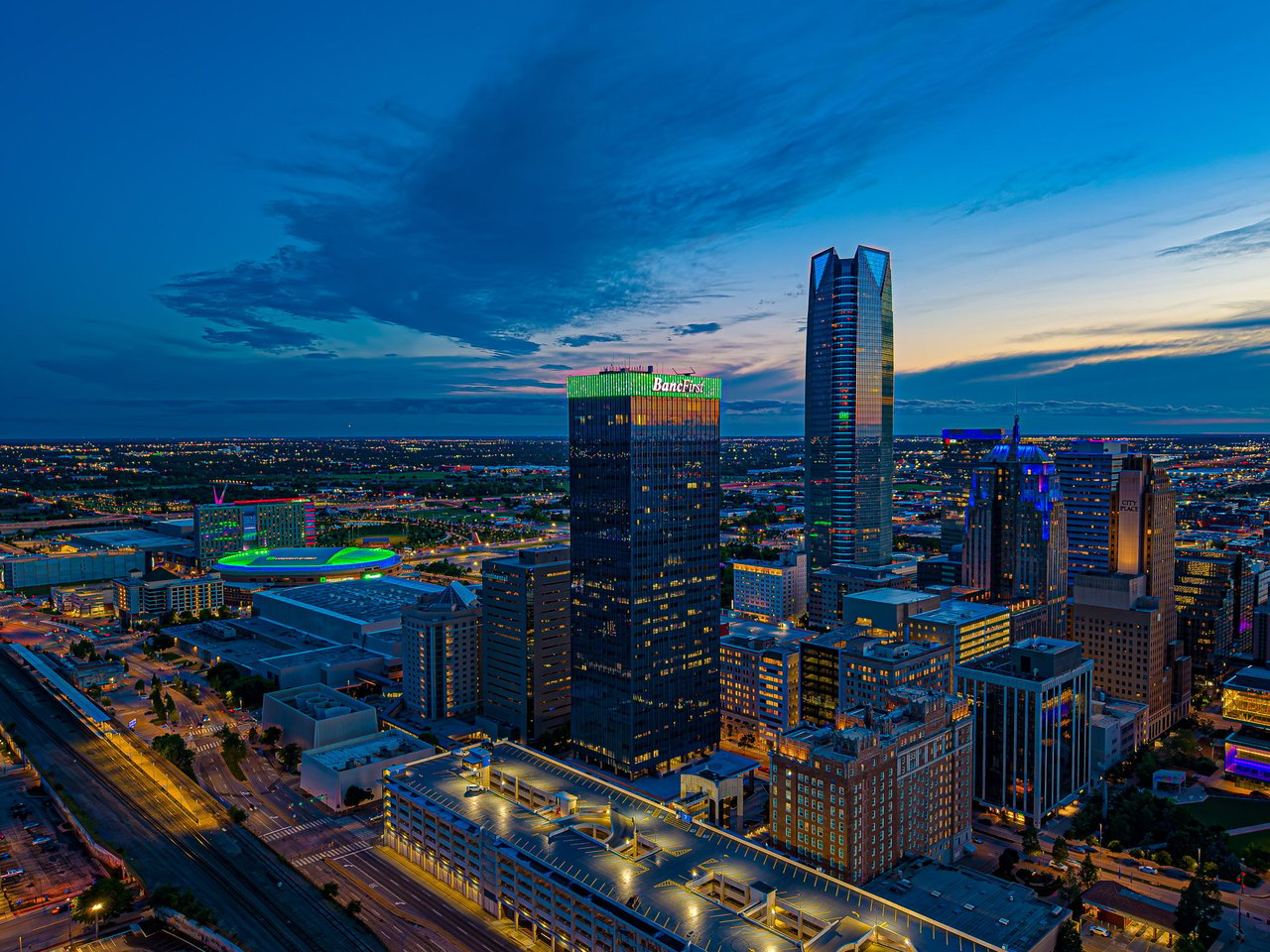
In Oklahoma City, two million dollars is a genuinely transformative number. It is not the entry point to the luxury market — it places a buyer firmly in the upper tier of the most prestigious residential real estate in the state. At this price point, buyers in OKC are looking at properties that would make a luxury buyer anywhere in the country stop and stare.
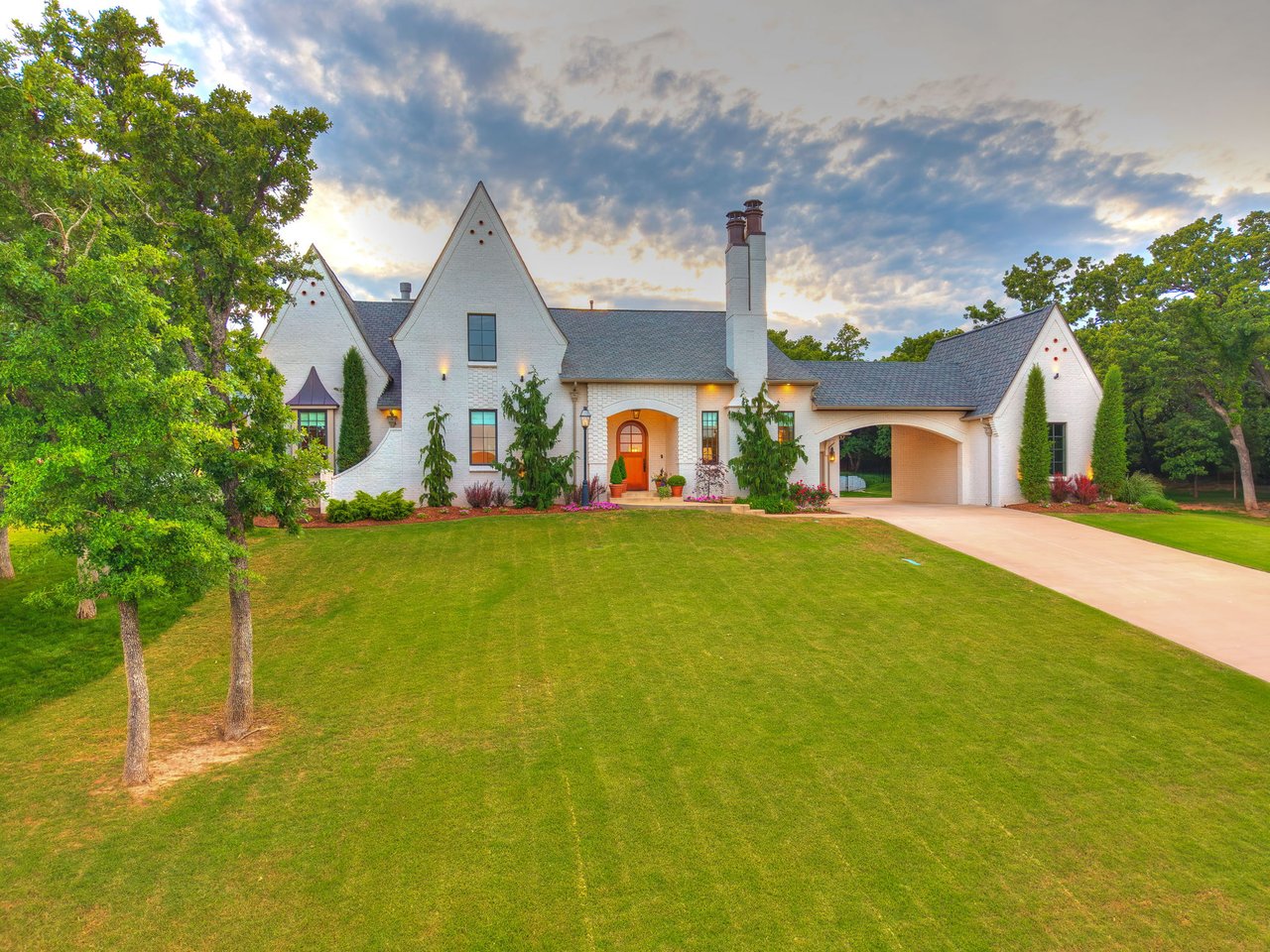
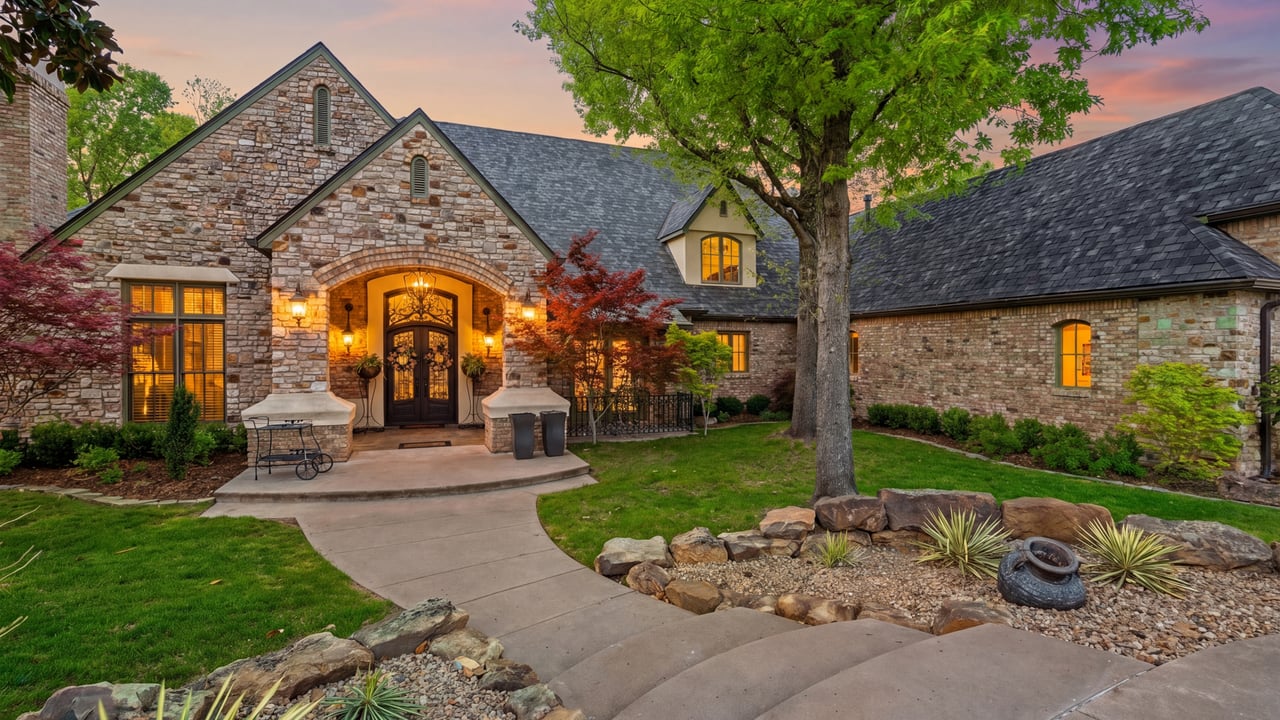
For two million dollars in Oklahoma City, a buyer can expect a custom-built or extensively renovated estate home of six thousand to ten thousand square feet or more, situated on a significant lot, in one of the city's most coveted addresses. We are talking about homes in Nichols Hills with architectural distinction and mature landscaping on oversized lots that deliver the kind of presence and privacy that money simply cannot buy in a dense urban market. We are talking about gated estates in Edmond on multiple acres with resort-style pools, outdoor living pavilions, four-car garages, wine cellars, home theaters, full guest quarters, and every finish level imaginable. We are talking about brand new custom construction in Gaillardia or the most exclusive sections of Northwest Oklahoma City where builders are producing homes with Wolf and Sub-Zero kitchen packages, primary suites that rival five-star hotel rooms, and smart home systems that control every dimension of the living experience.
Two million dollars in Oklahoma City also buys something that simply cannot be purchased in overpriced markets at any price: space. Genuine, generous, breathable space. Land. Privacy. The ability to step outside your front door and not be standing on top of your neighbor. The ability to build outdoor living spaces that are actually usable — not postage stamp patios but full outdoor kitchens, covered entertainment areas, fire features, and pools that serve as the centerpiece of a lifestyle rather than an afterthought squeezed into a tiny backyard.
Oklahoma also carries no state income tax burden that devastates purchasing power the way California does, property taxes that are among the most reasonable in the nation, and a cost of living that allows buyers to actually enjoy the wealth they have accumulated rather than watching it disappear into taxes, HOA fees, and the general premium of existing in an overpriced market.
What $2 Million Buys in Dallas
Dallas is the most natural comparison point for Oklahoma City buyers because the two cities share a cultural DNA — Southern sensibility, energy industry roots, a love of big spaces and outdoor living — and because Dallas has spent the last decade marketing itself aggressively as one of America's premier luxury real estate destinations.
The Dallas market has genuinely delivered on many of those promises. The city's luxury neighborhoods, particularly Highland Park, Preston Hollow, and University Park, are beautiful and well-established, with architectural character, strong schools, and the kind of community identity that serious buyers value. There is no question that Dallas is a world-class city.
But the math at the two million dollar price point tells a very different story than the marketing does. In Highland Park, two million dollars is not a comfortable luxury budget — it is very close to the median home price for the neighborhood, meaning you are purchasing something that is average for that zip code rather than exceptional. In Preston Hollow, two million dollars buys you entry into a neighborhood where the aspirational properties — the ones with the land, the scale, and the presence that serious luxury buyers are looking for — start well above your budget and climb quickly toward five, eight, and ten million dollars. What two million dollars actually delivers in Dallas's most prestigious neighborhoods is often a home in the four thousand to five thousand square foot range on a modest lot, beautifully finished but fundamentally constrained by the land scarcity and price density that comes with being one of the most desirable cities in Texas.
Even in Dallas's more attainable luxury corridors, two million dollars is a price point that requires compromise. You are making choices about neighborhood, lot size, square footage, and finish level that simply do not exist as tradeoffs in Oklahoma City at the same budget. The dollar simply does not stretch as far, the land is considerably more expensive, and the premium you are paying for the Dallas address is real and substantial.
For a buyer who genuinely needs to be in Dallas for professional reasons, the Dallas luxury market has tremendous merit. But for a buyer with flexibility, the comparison to Oklahoma City is not particularly close.
What $2 Million Buys in Nashville
Nashville has been one of the most remarkable real estate stories in America over the past decade. The city's explosive population growth, driven by corporate relocations including Oracle, Amazon, and AllianceBernstein, a thriving music and entertainment industry, and the state of Tennessee's favorable tax climate, has pushed home values dramatically upward and transformed what was once a very affordable market into one of the most competitive in the country.
The result is that two million dollars in Nashville in 2026 is a very different proposition than it was even five years ago. In the most prestigious Nashville neighborhoods — Belle Meade, where the median luxury home price now sits around $2.85 million, and Green Hills and Forest Hills, where entry-level luxury starts between $1.5 million and $2 million — two million dollars places a buyer at or below the neighborhood median. You are not buying exceptional in these zip codes at two million dollars. You are buying average, or slightly below average, depending on the specific street and the specific property.
Nashville's luxury market does offer genuine quality and character. The city's architectural diversity, the beauty of its rolling hills, and the strength of its private school ecosystem are all real. But the combination of surging demand from out-of-state relocators and constrained land supply in the most desirable areas has compressed the value proposition significantly. A buyer spending two million dollars in Nashville is competing in a market that has appreciated dramatically and continues to do so, which creates opportunity for sellers but genuine challenges for buyers trying to maximize what their money delivers.
Compared to Oklahoma City, Nashville at the two million dollar level typically delivers fewer square feet, less land, and significantly less outdoor space — because the land premium in Nashville's best neighborhoods has become nearly as aggressive as what buyers encounter in more traditionally expensive markets. The lifestyle is wonderful, but the value arithmetic clearly favors Oklahoma City.
What $2 Million Buys in California
California deserves a chapter of its own because the contrast with Oklahoma City at the two million dollar price point is genuinely breathtaking — and not in the way California's reputation might suggest.
In Los Angeles, two million dollars in 2026 is a number that the market itself has recently described as the sweet spot for "comfortable upscale living" rather than true luxury. The median sale price per square foot in Los Angeles is running around $637 per square foot for overall market transactions, and considerably higher in the neighborhoods where serious luxury buyers want to be. What that means in practice is that two million dollars in Los Angeles buys a home in the three thousand to perhaps four thousand square foot range in a neighborhood like Studio City, Valley Village, or Culver City — areas that are pleasant and desirable but that bear no resemblance to the luxury lifestyle that two million dollars commands in Oklahoma City.
To enter the true luxury tier in Los Angeles — Brentwood, Santa Monica, the Hollywood Hills, Bel Air — buyers need to be prepared to spend well above two million dollars, with genuinely exceptional properties in those neighborhoods starting at three, four, and five million dollars and climbing rapidly toward the stratosphere. Two million dollars in the neighborhoods where serious Los Angeles luxury buyers actually want to live buys something that most Oklahoma City buyers with half that budget would consider a starter home.
Then there is the California ownership cost equation, which dramatically changes the real value calculation. California's state income tax rate for high earners reaches 13.3 percent, the highest in the nation. Property taxes, while calculated at one percent of assessed value at purchase, reset to market value at each transaction and grow from there. The combination of high acquisition prices, a state income tax that relentlessly erodes purchasing power, insurance costs that have skyrocketed in recent years, and a regulatory environment that makes everything from renovations to new construction extraordinarily expensive creates a total cost of ownership that makes the purchase price look like the smallest part of the equation.
San Francisco and the Bay Area tell a similar story with even more extreme numbers. Two million dollars in San Francisco buys, at the median price per square foot, approximately two thousand to twenty-five hundred square feet of living space — often in a condominium or townhome rather than a single-family home with land — in a market that has faced significant headwinds from corporate departures, crime concerns, and quality of life challenges that have made even wealthy buyers reconsider the California premium.
"When I show a California buyer what two million dollars delivers in Oklahoma City, the most common reaction I get is silence. Just silence. Then they start asking me how quickly they can make this happen. They have been told their whole lives that California real estate is the gold standard and suddenly they are looking at a ten-thousand square foot gated estate on three acres and realizing that everything they believed about real estate value was geography-specific, not universal." — Wyatt Poindexter, Managing Partner, The Agency Oklahoma City & Tulsa
What $2 Million Buys in New York
New York City is the most extreme data point in this comparison, and it is worth examining honestly because it illustrates more clearly than anywhere else just how dramatically geography distorts real estate value in America.
In Manhattan, two million dollars in 2026 is a number that buys a buyer into what the market itself describes as a refined condominium or cooperative apartment in the twelve hundred to eighteen hundred square foot range. Two bedrooms. Two bathrooms. A doorman building with a gym and perhaps a rooftop deck. In some of Manhattan's most prestigious neighborhoods, two million dollars buys a classic pre-war co-op on the Upper East Side — beautiful, historically significant, and roughly the size of a generous Oklahoma City guest house. The average price in Manhattan's luxury tier runs approximately $2,900 per square foot, which means two million dollars buys you approximately 690 square feet of space in that tier. Not six thousand. Not eight thousand. Six hundred and ninety square feet.
The broader New York market does offer more for the money as buyers move to Brooklyn, Queens, and the outer boroughs, where two million dollars can buy a brownstone townhome with genuine character and perhaps two thousand square feet of living space. But the trade-off is the commute, the density, and the reality that the properties buyers actually dream of in New York — the spacious Manhattan apartments with park views and full amenity buildings — sit well above the two million dollar threshold in 2026.
Beyond the purchase price, New York's total cost of ownership equation includes a mansion tax on purchases above one million dollars, monthly maintenance and common charge fees that on a two million dollar apartment routinely run two thousand to four thousand dollars per month before the mortgage, New York state and city income taxes that combine to take a significant share of every dollar earned, and property taxes that continue to escalate. The lifestyle New York offers is genuinely singular, and for buyers who need to be there, the market delivers on its promises. But as a pure value comparison to what Oklahoma City delivers for the same investment, there is no contest.
The Oklahoma City Advantage: What the Numbers Cannot Fully Capture
The square footage comparisons and price-per-foot calculations tell a compelling story on their own, but they do not capture the full picture of what makes Oklahoma City's two million dollar luxury market genuinely exceptional.
They do not capture the community. Oklahoma City is a city where neighbors know each other, where the social fabric of its finest neighborhoods has been woven over generations, and where the warmth and authenticity of the people who live here is something that no amount of money can manufacture in a transactional coastal market.
They do not capture the commute. Getting across Oklahoma City takes fifteen minutes. Getting across Dallas can take an hour. Getting anywhere in Los Angeles or New York during peak hours is an exercise in surrendering time that could be spent on something meaningful.
They do not capture the outdoor lifestyle. Oklahoma's lakes, its wide open spaces, its hunting and fishing culture, the extraordinary properties available at Grand Lake and Carlton Landing — these are dimensions of life that simply do not exist at any price point in Manhattan or Los Angeles, and that exist only in compressed, expensive forms in Dallas and Nashville.
And they do not capture the trajectory. Oklahoma City's luxury market is in the early stages of a discovery cycle that markets like Dallas and Nashville completed years ago. Buyers who are arriving now are arriving at the beginning of that appreciation story, not at the top of it.
"The buyers who figure out Oklahoma City first are the ones who are going to look back in ten years and feel like genuine visionaries. We are at the moment in this market's history where the value is extraordinary and the awareness is just beginning to catch up to the reality. That window will not stay open indefinitely, and the buyers who move through it now are going to be very glad they did." — Wyatt Poindexter, Managing Partner, The Agency Oklahoma City & Tulsa
The Next Step
If you are a buyer currently searching in Dallas, Nashville, California, or New York — or if you are considering a relocation and have not yet had this conversation — the most valuable call you can make is to Wyatt Poindexter at The Agency Oklahoma City and Tulsa. With over 31 years of selling Oklahoma's finest estates and homes, membership in the Elite Guild of the Institute of Luxury Home Marketing, and the full global marketing power of The Agency's 160-plus office worldwide network, Wyatt is uniquely positioned to show you exactly what your budget delivers in Oklahoma City and why an increasing number of the country's most sophisticated buyers are choosing to make this their home.
The math is real. The lifestyle is real. The opportunity is real. Come see it for yourself.
Wyatt Poindexter | Managing Partner | The Agency Oklahoma City & Tulsa | 405-417-5466 | www.OKLuxuryHomes.com | 31 years of selling Oklahoma's finest estates and homes | Elite Guild Member of The Institute of Luxury Home Marketing | One of the top 5 luxury realtors in all of Oklahoma for over 15 years.