The Home They Never Thought They Would Sell: Navigating Legacy Estates in Oklahoma
There is a particular kind of silence that settles over a room when a family finally admits what they have known for years but have never been willing to say out loud. The children are grown and scattered across the country. The house is too large for one person. The stairs have become difficult. The garden that once brought such joy has become an obligation. And the home — the home where Thanksgiving was celebrated for forty years, where children learned to walk, where a marriage was built room by room over a lifetime — the home is waiting for something that no one in the family has the heart to name.
Selling a legacy estate is unlike any other real estate transaction. It is not a move-up sale driven by ambition. It is not a relocation driven by opportunity. It is one of the most emotionally complex decisions a family will ever make — a negotiation not just with a buyer but with memory, with identity, with the accumulated weight of a life well lived inside four walls that have absorbed decades of everything that matters most.
Wyatt Poindexter has guided more of these conversations than perhaps any other real estate professional in the state of Oklahoma. Over 31 years of selling the state's finest estates and homes, he has sat across the kitchen table from three generations of Oklahoma families at precisely the moment when the idea of selling the family home transitions from unthinkable to inevitable. He understands this process in a way that no credential can fully capture — because understanding it requires not just market knowledge but genuine human empathy and a respect for what these properties represent beyond their square footage and their price per foot.
What Makes a Property a Legacy Estate
Not every expensive home is a legacy estate. A legacy estate is something more specific and more profound. It is a property that has become inseparable from a family's identity — a place where the architecture, the grounds, the rooms, and even the imperfections carry specific meaning that cannot be transferred to a new owner but must instead be honored in the act of passing it on.
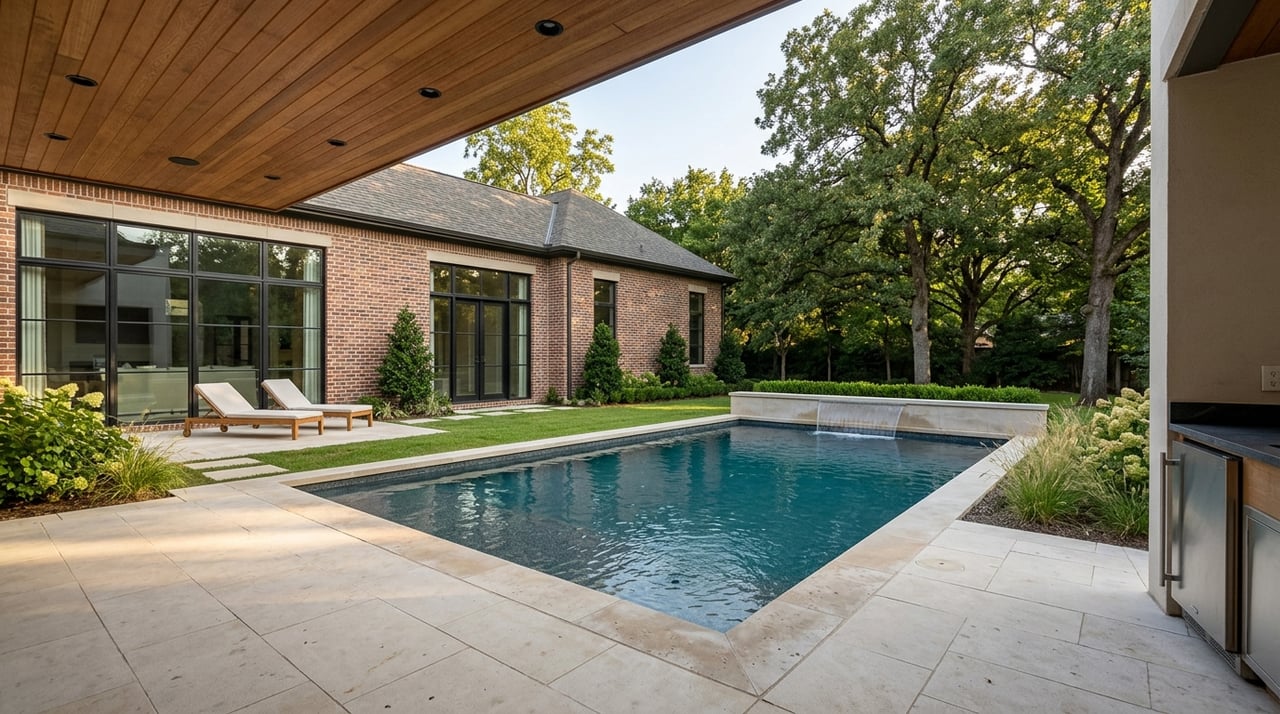
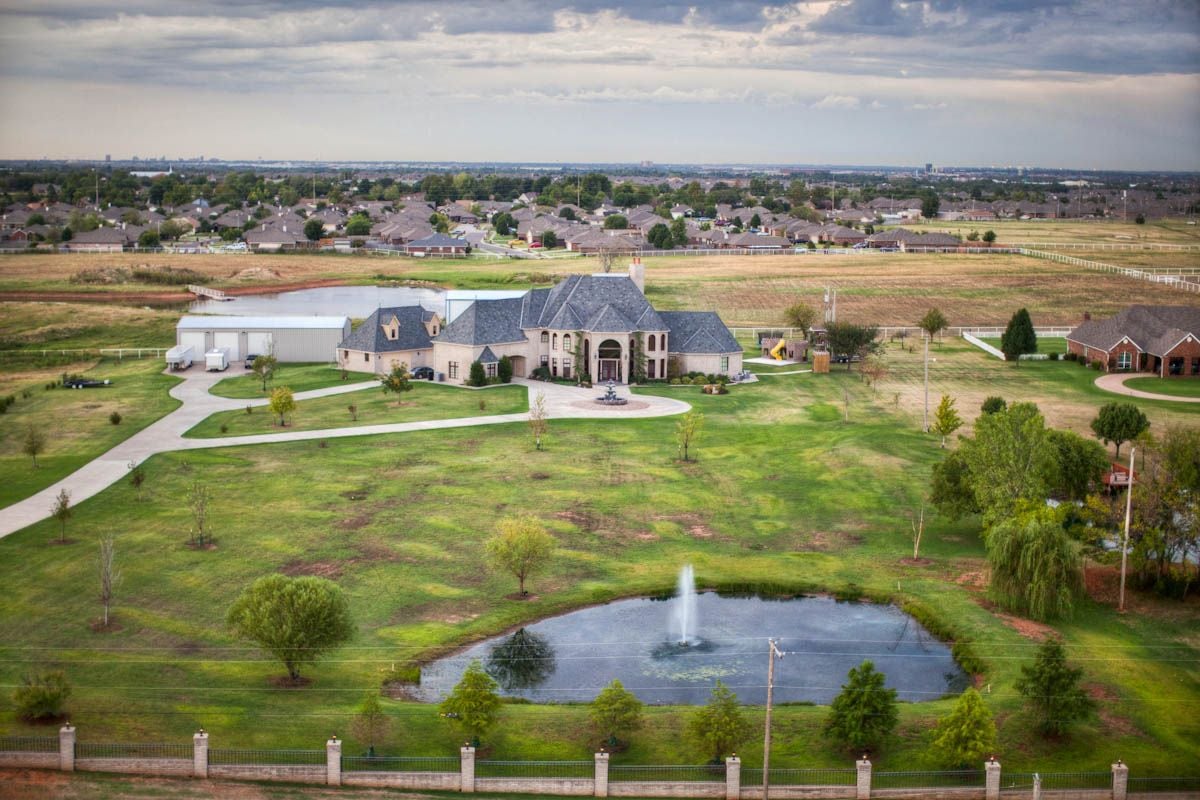
Legacy estates in Oklahoma take many forms. They are the Nichols Hills properties built in the 1940s and 1950s that have anchored some of Oklahoma City's most accomplished families for multiple generations — homes with original hardwood floors and stone fireplaces that have never been touched because touching them would mean acknowledging that change is coming. They are the sprawling acreage estates outside Edmond and Piedmont where three children grew up riding horses and where the barn, the pond, and the treehouse are as much a part of the family's story as any room in the main house. They are the Grand Lake properties where summers were spent for thirty years, where grandchildren learned to water ski off the same dock where their parents learned before them, and where the idea of strangers pulling up to that dock is genuinely difficult to sit with.
What these properties share is not a price point or an architectural style. They share a depth of meaning that the owners themselves sometimes struggle to articulate. They are not simply homes. They are the physical evidence of a family's life together — and selling them requires an advisor who understands that the emotional weight of the decision is not a complication to be managed. It is the most important thing in the room.
The Conversation That Changes Everything
In Wyatt's experience, the decision to sell a legacy estate almost never begins with a phone call to a real estate agent. It begins much earlier, quietly, in conversations that happen between family members over holiday dinners and in hushed exchanges between adult siblings who are finally willing to say what everyone has been thinking. It begins when a widow admits to her daughter that she has been eating every meal alone at a dining room table that seats twenty. It begins when a patriarch's physician recommends a single-story home and the family realizes that the grand staircase they have always admired has become an obstacle. It begins when the property taxes, the insurance, the maintenance, and the sheer physical demands of a large estate become a burden rather than a privilege.
By the time a family calls Wyatt, they have usually already done the hardest part. They have made the decision — or at least made the decision to explore the decision. What they need at that point is not a salesperson. They need an advisor who will slow down, sit with them in that home, and treat the conversation with the gravity it deserves.
"When a family calls me about selling a home they have lived in for forty years, the last thing I do is start talking about price. I start by listening. I ask them to tell me about the house. I ask them what they love most about it. I ask them what they are most afraid of in this process. Because if I don't understand what this property means to them, I cannot possibly represent it the way it deserves to be represented — and I cannot serve these clients the way they deserve to be served." — Wyatt Poindexter, Managing Partner, The Agency Oklahoma City & Tulsa
The Emotional Architecture of Selling Something Irreplaceable
Every room in a legacy estate carries a different emotional charge. There is the kitchen where a mother cooked Sunday dinners for thirty years and where the countertop still bears the small burn mark from a Thanksgiving in 1987 that became a family story. There is the study where a father worked late into the night and where the bookshelf still holds the volumes he annotated in his own handwriting. There is the garden that was planted one weekend in spring and tended every season since, where the roses have grown so established that they would survive without anyone to care for them but that seem to need the attention anyway. There is the children's bathroom where the heights were measured and penciled onto the door frame, a record of years that no one has the heart to paint over.
These details are not incidental to the transaction. They are the transaction. They are what makes selling a legacy estate so different from every other kind of real estate sale, and they are what makes it so important to work with an agent who understands that the pencil marks on the door frame are worth more to this family than the crown molding in the entryway — and who will honor that truth throughout the entire process.
The grief that accompanies these sales is real and should be acknowledged. It is not the grief of loss — not usually — but the grief of transition, the particular ache of acknowledging that a chapter of life that felt permanent was, like all chapters, finite. Families going through this process deserve space to feel it. They deserve an advisor who will not rush them, who will not minimize what they are experiencing, and who will understand that a phone call that takes forty-five minutes because the seller wants to talk about the history of the garden is not a waste of time. It is the most important part of the work.
Why Legacy Estates Require a Different Kind of Marketing
The way a legacy estate is brought to market matters enormously — not just for achieving the maximum price, but for honoring what the property represents and finding the buyer who is right for it in a way that goes beyond financial qualification.
A legacy estate buyer is not looking for a house. They are looking for a home that has earned its character — a place that carries the evidence of a life fully lived, that has the kind of warmth and presence that new construction almost never achieves, that offers something intangible and irreplaceable that no amount of money spent on finishes and fixtures can manufacture. Finding that buyer requires telling the story of the property in a way that reaches them on a level that goes beyond square footage and price per foot.
This is where Wyatt's approach, and The Agency's extraordinary marketing platform, create a genuinely distinctive advantage. The Agency's in-house PR team has established relationships with the most influential luxury real estate media platforms in the world — Mansion Global, Forbes, the New York Post, Zillow Gone Wild, and ESPN — and the story of a great Oklahoma estate, sold by the family that built it across three generations, is precisely the kind of narrative that these platforms are built to tell. It is a story of place, of legacy, of the particular beauty of Oklahoma's most accomplished families and the homes they have created. That story, told with the right photography, the right words, and the right reach, finds the buyer who is not just willing but genuinely honored to be the next steward of something significant.
"I have always believed that the right buyer for a legacy estate is not the buyer who can afford it. It is the buyer who understands it. My job is to find that person — wherever they are in the world — and to introduce them to this property in a way that makes them feel, before they ever walk through the door, that this home was waiting for them." — Wyatt Poindexter, Managing Partner, The Agency Oklahoma City & Tulsa
Navigating the Process: What Oklahoma Families Need to Know
For families in the early stages of considering the sale of a legacy estate, there are several realities worth understanding before the process begins.
The first is that timing is personal and cannot be rushed by the market. The question of when to sell a legacy estate is almost never purely financial. It is a question of readiness — emotional readiness, family readiness, and the particular kind of readiness that comes from having done the interior work of acknowledging that the home's next chapter belongs to someone else. Wyatt works with families on timelines that reflect their reality, not his production calendar. Some of his most meaningful client relationships have begun two years before a home is ever listed, because the family needed that time to arrive at a place of genuine peace with the decision.
The second reality is that pricing a legacy estate requires a depth of market knowledge and a sensitivity to the property's specific character that generic automated valuation tools cannot provide. Legacy estates are by definition unique. They do not have direct comparables. Pricing them correctly requires a sophisticated analysis of everything the property offers — the architectural significance, the location, the condition, the provenance, the story — combined with a deep understanding of who the buyer pool is and what they will pay for something genuinely irreplaceable.
The third reality is that the process itself can be healing when it is handled with care. Families who have worked with Wyatt through the sale of a legacy estate often describe the experience as something unexpected — not just a transaction but a meaningful chapter in the property's story, a passage that honored what the home had been while opening the door to what it would become. When a buyer is found who genuinely loves and appreciates the property, who looks at the garden and asks about the roses, who notices the pencil marks on the door frame and understands what they mean — that moment is one of the most profound in the entire process. It is the moment the family knows they have chosen the right advisor and found the right buyer.
The Agency: A Global Platform for Oklahoma's Most Significant Properties
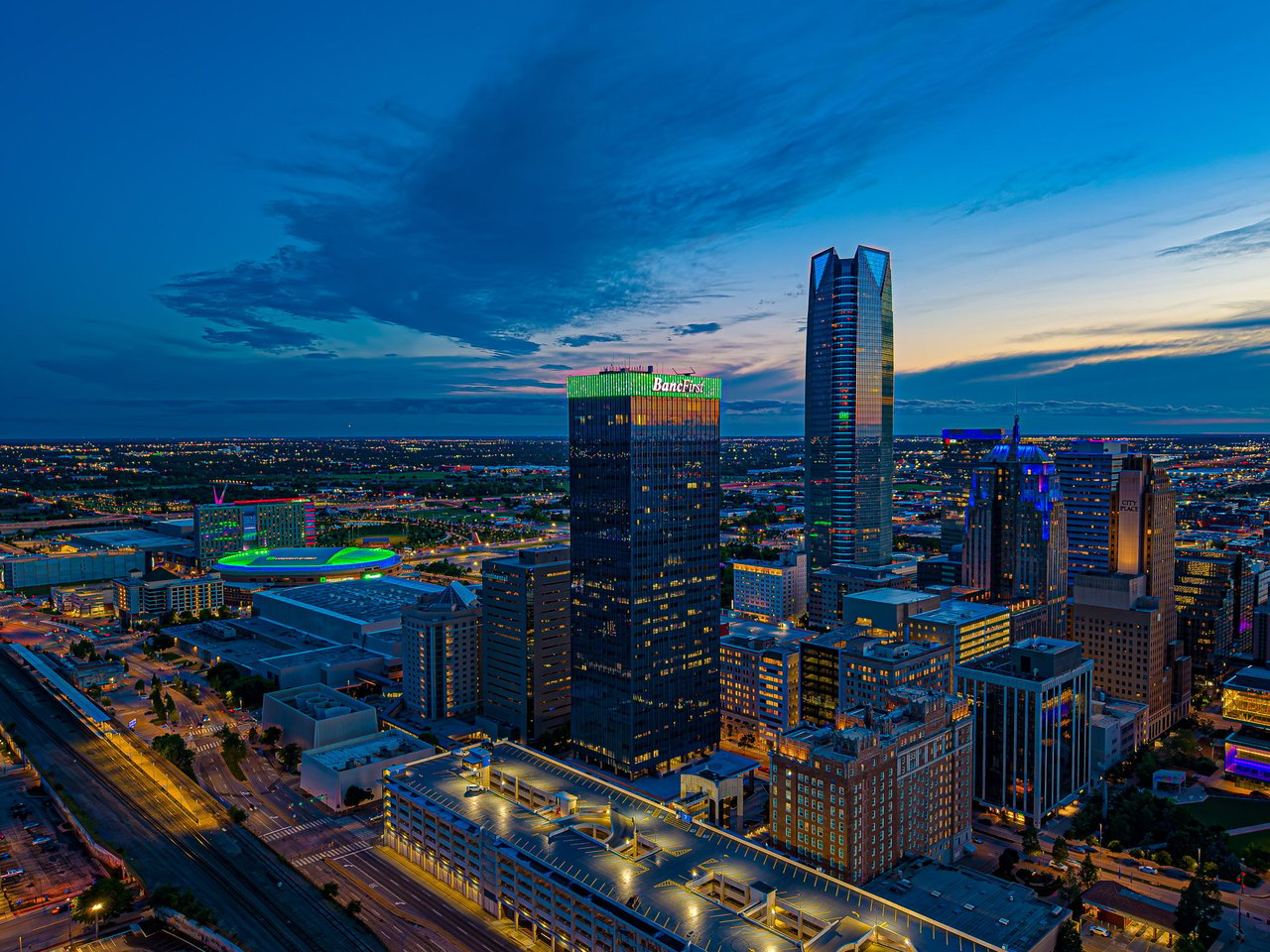
When the time comes to bring a legacy estate to market, the platform behind the listing determines the size and the quality of the buyer pool it reaches. The Agency operates from more than 160 offices spanning the globe, with a marketing infrastructure that was built specifically to serve properties at the very top of the market. For a legacy estate in Oklahoma City, Tulsa, or anywhere across the state, The Agency's reach means that the right buyer is not limited to those who happen to be searching in the local market on a given week. They may be in New York, considering a move back to the Midwest. They may be in Dallas, looking for an Oklahoma City base. They may be in London, looking for an American property in a market that offers extraordinary value compared to anything available on the coasts. The Agency finds them wherever they are and tells them the story of what is waiting for them in Oklahoma.
A Final Thought on What These Homes Deserve
Every legacy estate in Oklahoma represents something that cannot be replicated and cannot be replaced. The families who built these homes — who chose the land, who worked with architects, who planted the gardens and hung the art and built the lives that gave these properties their soul — deserve to have them passed on with the care and the dignity that their investment of time, money, and love demands.
Selling these properties is not simply a real estate transaction. It is an act of stewardship. And stewardship requires an advisor who sees it that way.
"In 31 years of doing this work, the sales that have meant the most to me have not been the ones with the highest price tags. They have been the ones where I found the right buyer for a family's most meaningful place — where I sat across from a mother or a father who had built something extraordinary and told them, honestly, that I would protect what they had created and find it a future worthy of its past. That is the promise I make to every family who trusts me with a legacy property. And it is the promise I have spent 31 years keeping." — Wyatt Poindexter, Managing Partner, The Agency Oklahoma City & Tulsa
If your family is navigating the consideration of selling a legacy estate in Oklahoma City, Tulsa, or anywhere across the state, the conversation with Wyatt Poindexter begins with a single, confidential call.
Wyatt Poindexter | Managing Partner | The Agency Oklahoma City & Tulsa | 405-417-5466 | www.OKLuxuryHomes.com | 31 years of selling Oklahoma's finest estates and homes | Elite Guild Member of The Institute of Luxury Home Marketing | One of the top 5 luxury realtors in all of Oklahoma for over 15 years.